Share

Share on facebook Share on facebook Share on facebook

Strategies for Thinking Beyond the Replacement Reserve – Deborah’s Place Case Study

How Deborah’s Place Approaches Managing and Upgrading their Aging Properties

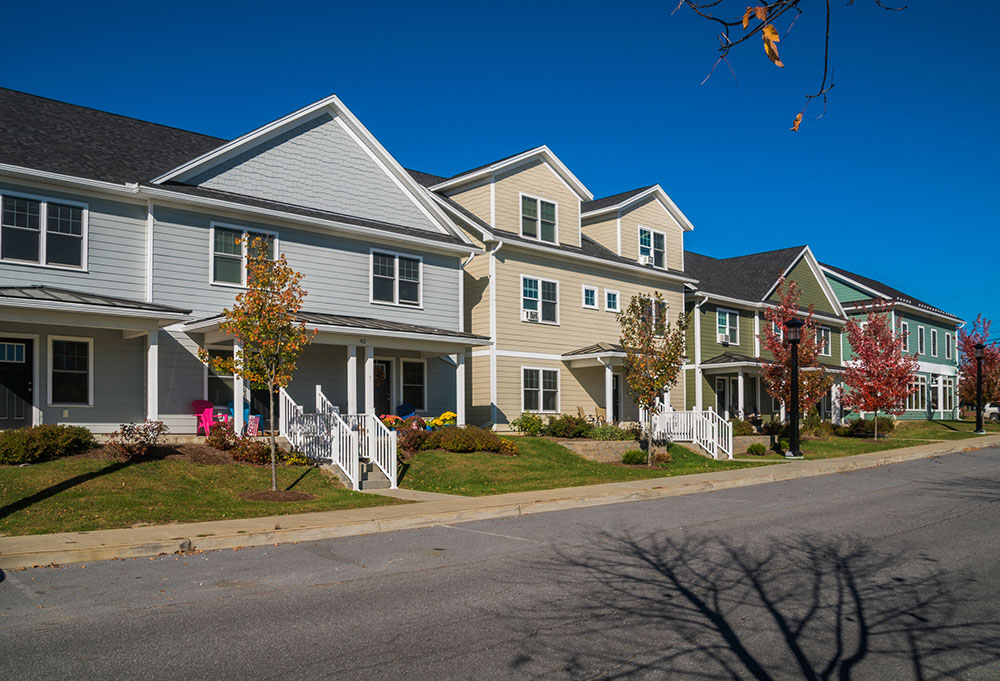
Deborah’s Place is the largest provider of Permanent Supportive Housing (PSH) in Chicago exclusively serving unaccompanied women who are experiencing homelessness. They serve more than 600 women a year with the following goal: once a woman comes to Deborah’s Place, they will never experience homelessness again. Deborah’s Place cares for their properties in a way that many providers strive to do. They use all the benefits of being a non-profit in finding creative approaches like philanthropy and volunteers to address and resolve challenges to keep their properties updated and well maintained. It is apparent in their housing stability outcomes that tenants like where they live and the services that come along with it, since Deborah’s Place maintains a 96% housing retention rate.

Share

Share on facebook Share on facebook Share on facebook

Using Medicaid’s Housing Related Services (HRS) to Create New Supportive Housing

An increasing number of states are including coverage of Housing Related Services (HRS) in their Medicaid programs. These new services aim to provide more units of supportive housing and higher quality services. CSH has found that states who include these six strategies in their efforts are more likely to be successful. Learn more about these efforts, examples and concrete next steps your state can take to ensure these programs lead to greater supportive housing capacity and higher quality supportive housing statewide.

Share

Share on facebook Share on facebook Share on facebook

Child Welfare Family Housing Voucher Briefs – Part 2

These briefs present information on federal housing voucher programs, such as the Family Unification Program (FUP), that child welfare and housing leaders can use to stabilize families through cross-sector partnerships. These briefs provide strategies for successfully administering FUP vouchers and identifying FUP eligible families. They also dispel common myths around the administration of FUP vouchers, so that these critical housing resources can be leveraged to to help strengthen families and keep children safe. Part 2 focuses on how to work successfully with housing partners to administer FUP vouchers for families .


To access the Brief on Family Housing Vouchers – Part 1, follow the link below.

Share

Share on facebook Share on facebook Share on facebook

Supportive Housing and Olmstead: State of the Conversation

This brief titled Supportive Housing and Olmstead: State of the Conversation, February 2024, delves into critical considerations for policymakers and advocates amidst implementing state HCBS settings rule transition plans and endeavors to ensure compliance with the landmark Olmstead v. L.C. decision. The essence of Olmstead lies in its vision to empower individuals with disabilities by fostering their seamless integration into communities and affording them the autonomy to choose supportive housing as a pathway to realizing this vision. This document recognizes the pivotal role of quality supportive housing in advancing these objectives and bolstering Money Follows the Person (MFP) initiatives across states.

Share

Share on facebook Share on facebook Share on facebook

Brief: Federal Housing Vouchers to Support Youth Transitions – Part 2

These briefs discuss how Family Unification Program (FUP) and Foster Youth to Independence (FYI) federal housing vouchers can support transition, wellbeing, and stability for youth/young adults’ transitions from foster care involvement with the child welfare system. Part 1 provides an overview of FUP and FYI vouchers. Part 2 offers a detailed guide to administering FUP and FYI vouchers for youth and young adults. 

The publications were made possible in collaboration with Casey Family Programs, whose mission is to provide, improve – and ultimately prevent the need for – foster care.


To access Part 1, please continue to through the link below.

Share

Share on facebook Share on facebook Share on facebook

Keeping Families Together: Co-Design Report

Meaningful changes to decrease the impact of the child welfare system on families must be led by the people most impacted by these systems. CSH hired a part-time Keeping Families Together (KFT) Fellow to work with CSH staff in a one-year project to co-design CSH strategy and approach to engaging parents highly impacted by child welfare and housing instability. The KFT co-design team approached their work in a relational way, co-creating every aspect of the work: from team meeting structure to determining final deliverables.

Below is a summary of major themes and recommendations from interviews and other experiments implemented by the KFT co-design team.

Share

Share on facebook Share on facebook Share on facebook

Child Welfare Family Housing Voucher Briefs

These briefs present information on federal housing voucher programs, such as the Family Unification Program (FUP), that child welfare and housing leaders can use to stabilize families through cross-sector partnerships. These briefs provide strategies for successfully administering FUP vouchers and identifying FUP eligible families. They also dispel common myths around the administration of FUP vouchers, so that these critical housing resources can be leveraged to to help strengthen families and keep children safe.

The publications were made possible in collaboration with Casey Family Programs, whose mission is to provide, improve – and ultimately prevent the need for – foster care.


To access the Brief on Family Housing Vouchers – Part 2, follow the link below.

Share

Share on facebook Share on facebook Share on facebook

Housing and Services to Preserve Native American Families with Child Welfare Involvement: Themes and Recommendations from Native American Partners

In the summer and fall of 2022, CSH and Casey Family Programs hosted a virtual talking circle and a series of subsequent conversations with Native American leaders, service providers and families from across the United States that work in the fields of child welfare, Indian Child Welfare Act and supportive housing. These conversations were led by Patty Beech Consulting, and focused on how to better connect quality, affordable housing and supportive services to Native American families who are at-risk of being separated or who have child welfare system involvement and are facing homelessness or housing instability.

Share

Share on facebook Share on facebook Share on facebook

10 Things to Do Now to Prevent Family Evictions

This brief provides ten steps that child welfare and family support leaders and their communities can take to advance a family eviction prevention plan. This plan aligns with broader shifts in child welfare policy and practice to build community- based preventative supports that strengthen families and keep children safe.

Share

Share on facebook Share on facebook Share on facebook

Brief | How Child Welfare Leaders Can Support Families and Prevent Family Eviction

These briefs report on the impact of evictions on families and present information on what child welfare and family support leaders and their communities can do now to prevent evictions for families and the importance of immediate and long-term cross-sector prevention strategies. In addition, the briefs include a list of ten steps to advance a family eviction prevention plan aligned with broader shifts in child welfare policy and practice and efforts to build community-based preventative supports that strengthen families and keep children safe.

The publications were made possible in collaboration with Casey Family Programs, whose mission is to provide, improve – and ultimately prevent the need for – foster care.


For additional information, download our brief on 10 things to do to prevent family evictions: