

The CSH Supportive Housing Need tool provides communities with system‑level data on supportive housing needs across populations and systems, informing policy and program design. It also provides financial modeling at the state and local levels, allowing communities to estimate the capital, services, and operating costs to make data-driven decisions that demonstrate the effectiveness and value of sustaining supportive housing.
Geography: National

Share
Share on facebook Share on facebook Share on facebook Share on facebook Share on facebook Share on facebookSupportive Housing Messaging Framework
CSH partnered with Housing Narrative Lab to research and understand supportive housing narratives. We saw a gap in supportive housing specific narrative data and sought to understand awareness and perceptions of supportive housing among broad audiences. These research findings will help the field coordinate and rally amplifiers around messaging that resonates and persuades.

Share
Share on facebook Share on facebook Share on facebook Share on facebook Share on facebook Share on facebookPolicy Brief: How State Leaders Can Take Action to Keep Families Together and Support Youth Transitions
CSH estimates that there are approximately 90,000 families and youth in need of supportive housing, including 43,646 families with child welfare involvement. While lack of housing should not necessitate child welfare involvement, housing instability alongside additional challenges such as substance use or mental health needs can affect the overall placement decision. Access to permanent housing often means that families can stay together while receiving child welfare prevention services or reunify more quickly if children are in out-of-home care. Research has demonstrated that children and youth who have a reliable place to call home also spend fewer days in foster care, experience a reduction in subsequent abuse and neglect cases, reduce their risk of subsequent homelessness, and increase their school attendance.
Housing vouchers and rental assistance play a significant role in keeping families together and supporting youth in transitioning successfully into adulthood. While most housing vouchers are issued from the U.S. Department of Housing and Urban Development (HUD) via local Public Housing Authorities (PHAs) , there are many states that have funded voucher and rental assistance programs for families and transition age youth. States like New Jersey, California, Washington, and Colorado have all developed and funded housing assistance to support child-welfare involved families and youth.
UPDATED March 2026
Share
Share on facebook Share on facebook Share on facebook Share on facebook Share on facebook Share on facebook2025 CSH Community Investment Year in Review
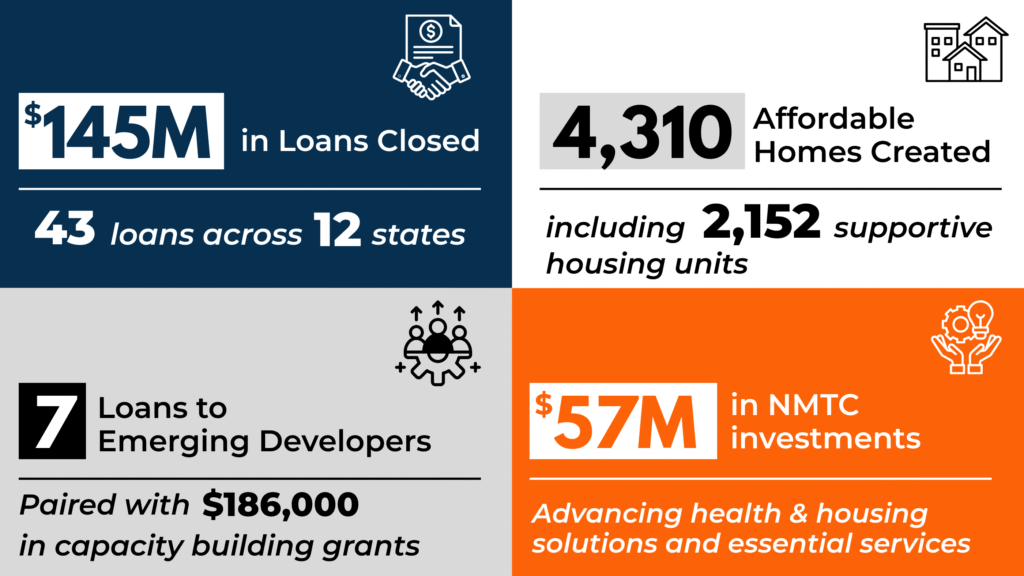
A look at how CSH deployed $202 million to advance supportive housing in 2025
In 2025, CSH’s Community Investment team deployed flexible, mission-driven capital to advance supportive housing and community-based health and service solutions nationwide. Through strategic lending and New Markets Tax Credit (NMTC) investments, we partnered with nonprofit and mission-aligned for-profit developers to expand access to affordable housing and essential services for people most impacted by homelessness.
2025 at a Glance
2025 Project Highlights

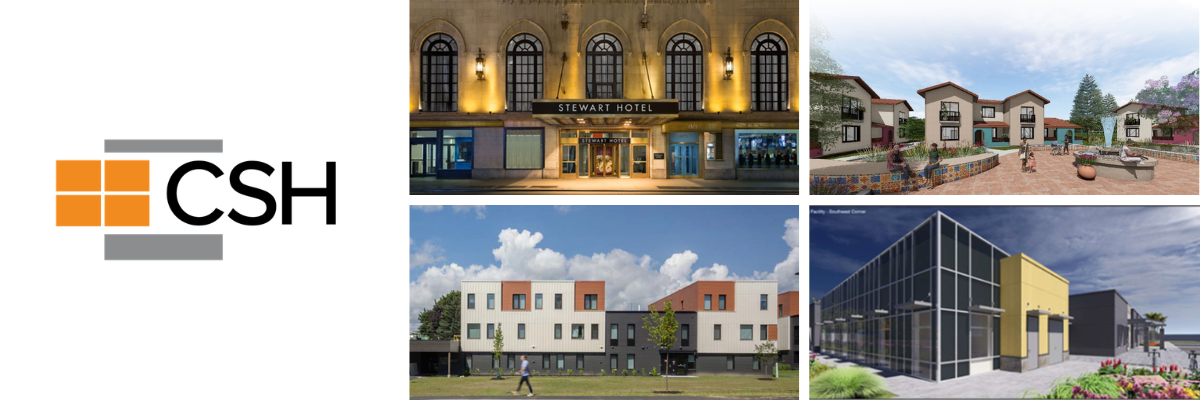
The Stewart Hotel | Manhattan, NY
A historic hotel reimagined as supportive housing in the heart of Manhattan
CSH provided $6.6 million in subordinate acquisition financing to support the transformation of the historic Stewart Hotel into 579 units of supportive and affordable housing. Developed by Breaking Ground and Slate Property Group, the project will dedicate 50% of units to formerly homeless people, with on-site supportive services.
The 31-story building, constructed in 1929, located across from Penn Station, includes space for social services and community use, with large unit layouts that support efficient conversion to high-quality supportive housing.
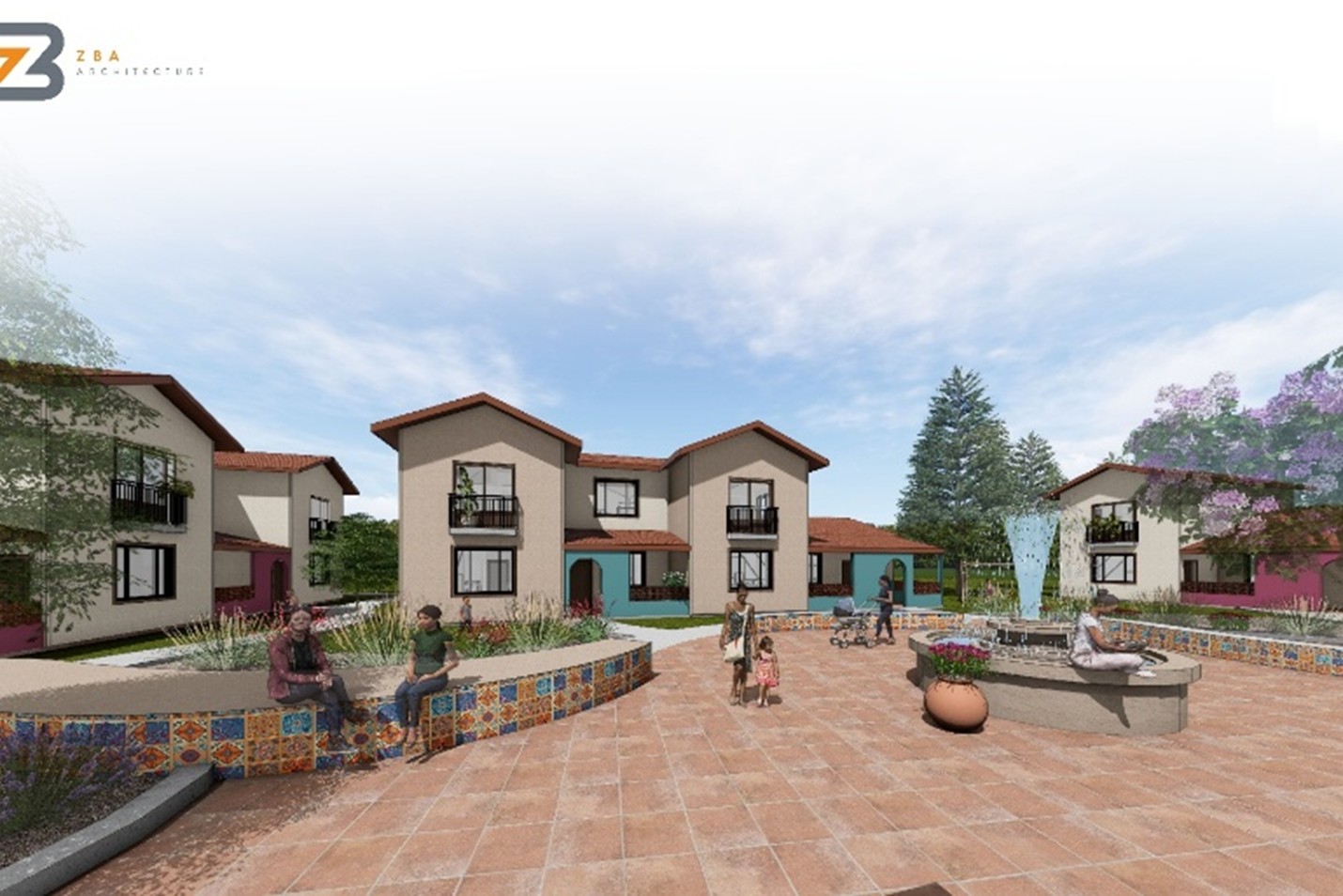
Casa MiA | Spokane, WA
Supporting an emerging developer with lived experience to bring supportive housing to Eastern Washington
CSH provided a $977,000 loan to MiA Mujeres in Action, an emerging developer led by staff and board members with lived expertise. CSH’s first loan in Eastern Washington will support the creation of 12 supportive housing units for women who are survivors of domestic violence.
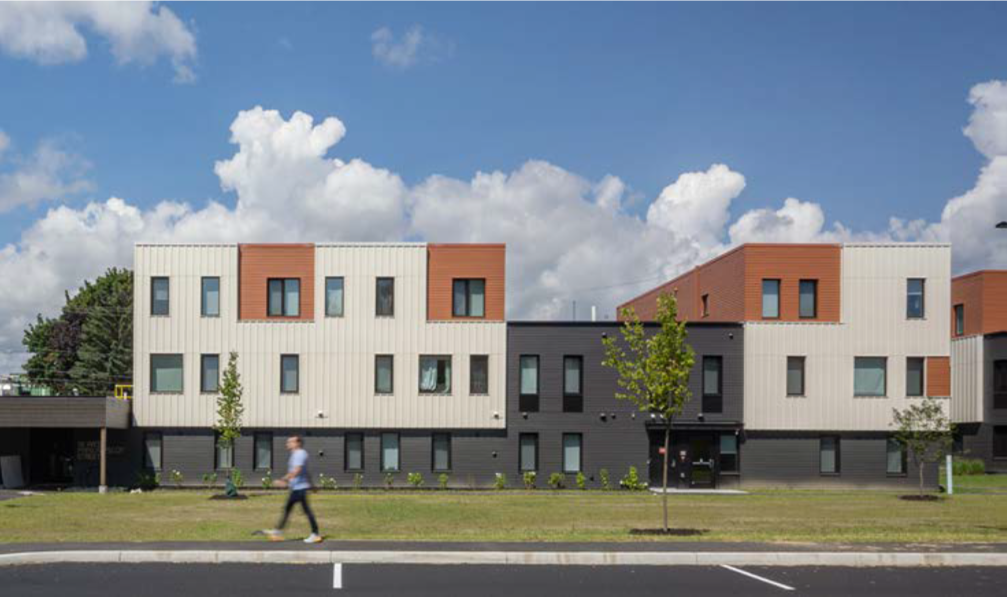
Bowdoin Street Senior Housing | Boston, MA
Aiding new senior housing with supportive units in CSH’s first Massachusetts investment
CSH provided a $3.85 million loan to nonprofit developer, Codman Square Neighborhood Development Corporation to support predevelopment and acquisition for new construction of a 50-unit senior housing development, including 13 supportive housing units for formerly homeless seniors. This project marks CSH’s first loan in Massachusetts.
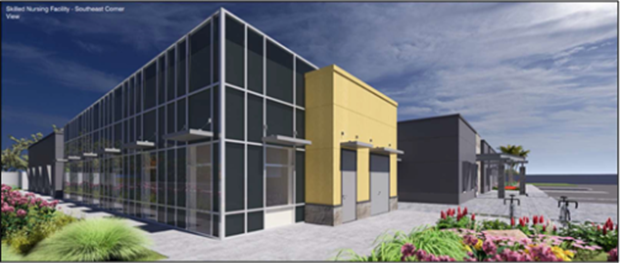
East Valley Medical Respite Center | Mesa, AZ
Advancing medical respite care and housing stability for people experiencing homelessness
CSH made a $15 million NMTC investment to support the development of the East Valley Medical Respite Center in Mesa, AZ, led by Circle the City, the only Federally Qualified Health Center in central Arizona that focuses exclusively on serving individuals experiencing homelessness.
The project will create a 30,000-square-foot facility with 85 medical respite beds, providing healthcare, behavioral health services, pharmacy access, and housing placement support, often offering clients their first safe place to recover after experiencing homelessness.
Looking Ahead to 2026
As we move into 2026, CSH remains committed to expanding access to capital for emerging developers, advancing supportive housing solutions, and investing in projects that strengthen housing stability, health, and community well-being nationwide.
Thank you for your continued partnership and support.
Share
Share on facebook Share on facebook Share on facebook Share on facebook Share on facebook Share on facebookCSH Secures $85 Million NMTC Allocation Award, Bringing Total Awards to $570 Million
Media Contact:
Jesse Dean, Director, Strategic Communication
[email protected] | 347-931-0132
New York, NY | January 28, 2026 – The Corporation for Supportive Housing (CSH) announced today an $85 million allocation of New Markets Tax Credit (NMTC) authority from the U.S. Department of the Treasury’s Community Development Financial Institutions (CDFI) Fund. The award is part of the Calendar Year 2024–2025 NMTC allocation round.
This new allocation brings CSH’s total NMTC authority to $570 million across eleven awards, its largest single‑round allocation and a significant milestone for the organization.
“This allocation strengthens our ability to make New Markets Tax Credit investments in ways that are disciplined, strategic, and closely aligned with community needs,” said Ross Clarke, Director, New Markets Tax Credits at CSH. “CSH uses NMTCs to finance projects that expand access to essential services, particularly services connected to deeply affordable housing. These investments help ensure that critical facilities and service providers can better meet the needs of their communities and create lasting jobs.”
Within a highly competitive round, CSH was selected as one of 142 Community Development Entities (CDEs) awarded New Markets Tax Credit allocation authority. CDEs are financial intermediaries certified by the CDFI Fund to make NMTC investments in low‑income communities.
As a national CDE, CSH will use its NMTC allocation to make investments in essential community facilities serving economically distressed areas. These investments build on CSH’s strong NMTC track record. CSH has deployed $467 million in NMTC allocation across 39 projects in 31 cities, supporting facilities such as Federally Qualified Health Centers, PACE centers, behavioral health clinics, medical respite programs, and food security infrastructure. Nearly 70% of these projects are part of developments that include co-located affordable or supportive housing (financed directly with NMTCs or separately with Low Income Housing Tax Credits), totaling more than 2,557 housing units nationwide, including 1,683 supportive housing units.
The award is part of a $10 billion national NMTC allocation round administered by the CDFI Fund. Since the program’s inception, the NMTC Program has delivered more than $81 billion in tax credit authority to support investment in low-income communities nationwide.
“This award reflects CSH’s enduring commitment to investing in impactful, proven solutions that strengthen communities and expand opportunity,” said Deborah De Santis, President and CEO of CSH. “We are deeply grateful to the U.S. Department of the Treasury and the CDFI Fund for recognizing CSH’s capacity to steward this important resource. The New Markets Tax Credit program remains a vital tool for advancing community health, economic stability, and thriving communities and this allocation will help us further our mission nationwide.”
About the Corporation for Supportive Housing
CSH (Corporation for Supportive Housing) advances affordable and accessible housing aligned with services by advocating for effective policies and funding, investing in communities, and strengthening the supportive housing field. Since our founding in 1991, CSH has been the only national nonprofit intermediary focused solely on increasing the availability of supportive housing. Over the course of our work, we have created more than 512,500 units of affordable and supportive housing and invested more than $2.2 billion in communities. Our workforce is central to accomplishing this work. We employ approximately 170 people across 30 states and U.S. Territories. As an intermediary, we do not directly develop or operate housing but center our approach on collaboration with a wide range of people, partners, and sectors. For more information, visit www.csh.org.
###

Share
Share on facebook Share on facebook Share on facebook Share on facebook Share on facebook Share on facebookCorporation for Supportive Housing Elects Three Distinguished Community and Business Leaders to Its Board of Directors
Media Contact: Jesse Dean
347-931-0132
[email protected]
New York, NY – January 26, 2026 – The Corporation for Supportive Housing (CSH) Board of Directors elected three new members, effective January 1, 2026, bringing the leadership body to 18 members. The new members are Rockette Ewell, Vice President, Community Affairs Manager at U.S. Bank; Kevin Goldsmith, Managing Director, Community Development Tax Credits and Intermediaries Lending at J.P. Morgan; and Carmen Heredia, Owner of Sonora Strategy Partners, who previously served as the director of the Arizona Health Care Cost Containment System (AHCCCS), which is Arizona’s Medicaid Program.
“We are thrilled to welcome Rockette, Kevin, and Carmen to the board. Their combined expertise in community reinvestment, Community Development Financial Institution (CDFI) innovation, and health policy reflects the breadth of leadership needed to advance our mission. Each brings a unique perspective that will help us strengthen partnerships and deliver solutions that build thriving communities,” said Michelle Norris, CSH Board Chair.
Rockette Ewell
Rockette Ewell is Vice President, Community Affairs Manager, California Region at U.S. Bank, where she oversees philanthropic giving and community impact initiatives statewide. Her work includes developing strategic partnerships that align with the bank’s corporate social responsibility priorities and support business growth across California. She and her team leverage their expertise in community development, CSR, and stakeholder engagement to create lasting value for the bank and the communities it serves. In addition, she is an active community leader, serving on several nonprofit boards and committees.
Kevin Goldsmith
Kevin Goldsmith is the Managing Director for Community Development Tax Credits (CDTC) and Intermediaries Lending at J.P. Morgan and helps lead the firm’s commitment to community development by investing in affordable housing, historic building preservation and community facilities like charter schools and health clinics. Prior to joining J.P. Morgan, Kevin worked at Grow America (formerly NDC), a national CDFI focused on community and economic investment.
Carmen Heredia
Carmen Heredia is the owner of Sonora Strategy Partners. She is the former director of the Arizona Health Care Cost Containment System (AHCCCS), which is Arizona’s Medicaid Program, Children’s Health Insurance Program (CHIP), and Mental Health Authority, which oversee acute, behavioral health, and long-term care services for more than 2 million Arizonans. She has worked with both Democratic and Republican governors to ensure fair access to quality healthcare and behavioral health services.
“These appointments signal our commitment to tackling housing and services challenges through bold, cross-sector collaboration. Rockette’s community engagement, Kevin’s financial leadership, and Carmen’s health policy experience will guide us in creating integrated strategies that connect housing, health, and opportunity for people with complex barriers to stability, and the communities that support them,” said Deborah De Santis, CSH President and Chief Executive Officer.
About the Corporation for Supportive Housing
CSH (Corporation for Supportive Housing) advances affordable and accessible housing aligned with services by advocating for effective policies and funding, investing in communities, and strengthening the supportive housing field. Since our founding in 1991, CSH has been the only national nonprofit intermediary focused solely on increasing the availability of supportive housing. Over the course of our work, we have created more than 512,500 units of affordable and supportive housing and invested more than $2.2 billion in communities. Our workforce is central to accomplishing this work. We employ approximately 170 people across 30 states and U.S. Territories. As an intermediary, we do not directly develop or operate housing but center our approach on collaboration with a wide range of people, partners, and sectors. For more information, visit www.csh.org.
###

Share
Share on facebook Share on facebook Share on facebook Share on facebook Share on facebook Share on facebookCongress Releases FY26 HUD Funding Bill: Key Takeaways for Supportive Housing
Earlier this week, Congress released the fiscal year (FY) 2026 HUD appropriations bill after several months of negotiations. The final agreement provides $77.3 billion for HUD in FY 2026, representing an increase over the yearlong continuing resolution that passed for FY25.
Key Provisions
The bill maintains stable funding across most accounts and includes targeted increases to help programs keep pace with rising rents and operating costs.
Tenant-based Rental Assistance: $38.439 billion, including $34.96 billion for contract renewals, $15 million for Veteran’s Supportive Housing vouchers, and $30 million for Family Unification Program vouchers, with most of the latter set aside for youth exiting foster care.
Emergency Housing Vouchers: While Congress did not provide new funding specifically for Emergency Housing Vouchers (EHVs), the bill increases Tenant Protection Vouchers by $264 million, for a total of $600 million, and allows public housing authorities to transition EHV holders to TPVs and other vouchers to ensure continued assistance.
Project-based Rental Assistance: $18.043 billion, including $1.031 billion for housing for older adults and $287 million for housing for people with disabilities.
Homeless Assistance Grants: $4.417 billion, including $290 million for Emergency Solutions Grants, $107 million for Youth Homeless Demonstration Programs, and $4.010 billion for the Continuum of Care (CoC)—which incorporates $43 million for cost‑of‑living adjustments and $52 million for new rapid re‑housing projects and supportive services for survivors of domestic violence.
Housing and Community Development: $3.3 billion for Community Development Block Grants and $1.250 billion for the HOME Investment Partnerships Program, supporting local efforts to expand affordable housing and strengthen community infrastructure.
Additional Funding
The House has already approved $324 million for the Community Development Financial Institutions (CDFI) Fund as part of the Financial Services appropriations bill. That funding will advance into the final package sent to the Senate. Congress also approved $5 million for supportive housing through the Second Chance Act Pay for Success Fund at the Department of Justice.
What’s Next
The House is expected to bring the FY26 HUD bill to the floor this week as part of a four‑bill minibus. The Senate returns from recess next week and is expected to vote shortly thereafter. As always, CSH will continue to monitor the process closely and provide timely updates as Congress advances its work.
Share
Share on facebook Share on facebook Share on facebook Share on facebook Share on facebook Share on facebookPolicy Brief: Aligning Social Practice and Supportive Housing for Community-Centered Housing
Supportive housing is a proven approach to breaking the cycle of homelessness for people with serious mental illness and other disabilities. Supportive housing is a cost-effective approach that combines affordable housing with voluntary support services, enabling people to live with stability, autonomy, and dignity. While supportive housing is an effective approach for addressing homelessness, residents also need social support to live healthy lives and address loneliness, isolation, and barriers to maintaining their mental health.
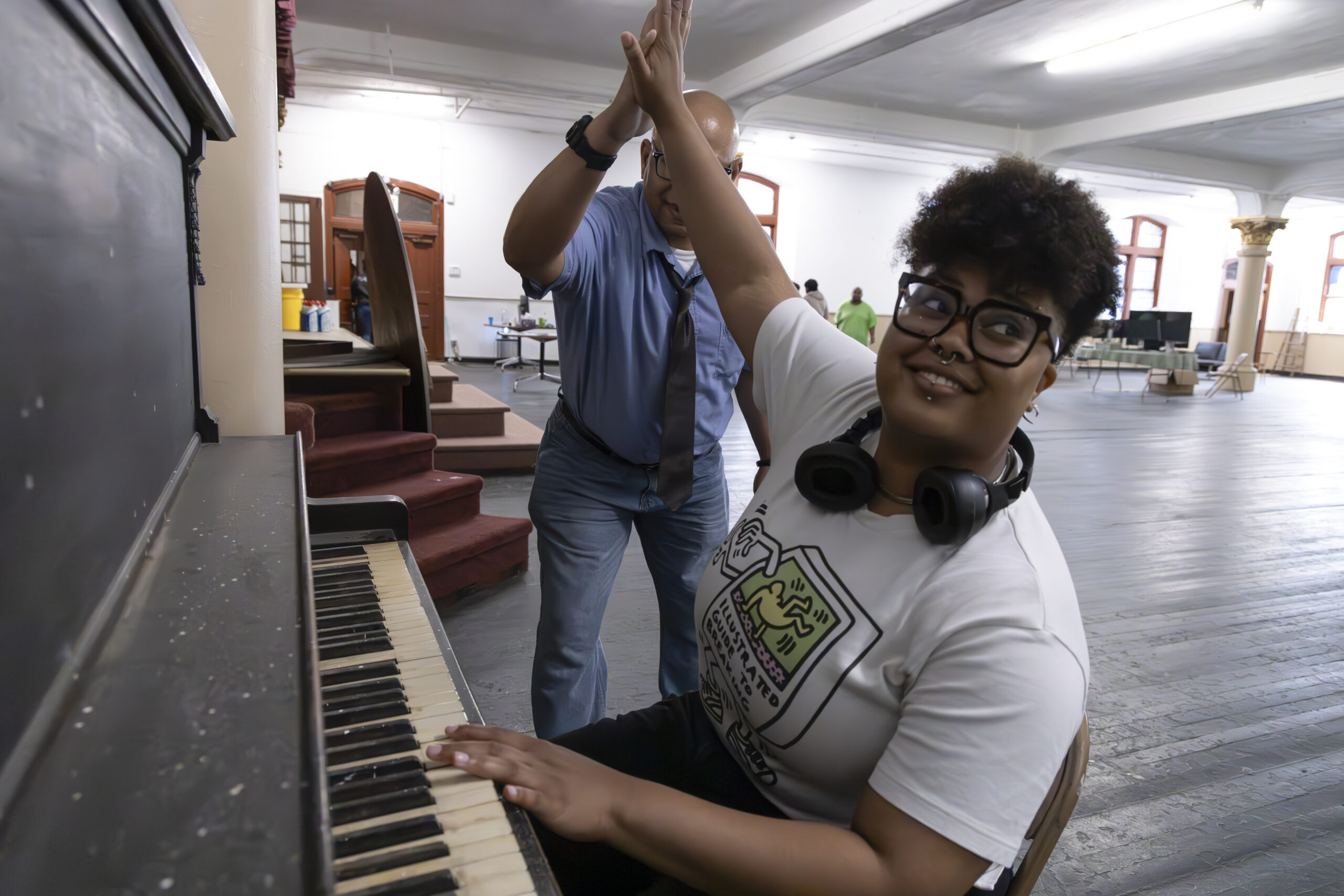
Fountain House and CSH are exploring Community-Centered Housing (CCH), an innovative approach that integrates the clubhouse model’s social practice into supportive housing. Pioneered by Fountain House, social practice uses community engagement and social connection to help people recover from mental illness.
This policy brief illuminates early research findings from pilot programs, showing that Community-Centered Housing strengthens social connections, reduces loneliness, and enhances residents’ sense of purpose and wellbeing. To forge a path forward for expanding CCH, the brief recommends bringing the model to additional pilot sites, conducting rigorous evaluation, expanding workforce training, and educating the field about social practice and supportive housing integration.
This approach offers a chance to reimagine what housing can achieve. By embracing this model, we can drive meaningful transformation in the housing sector and create environments that support people living with serious mental illness and promote lasting recovery and stability.
Share
Share on facebook Share on facebook Share on facebook Share on facebook Share on facebook Share on facebookFountain House and CSH Partner to Build Communities—Not Just Housing—for People with Mental Illness
New Community-Centered Housing approach integrates evidence-based approach to reduce isolation and support recovery
CSH Media Contact: Jesse Dean | [email protected] | 347-931-0132
Fountain House Media Contact: Witney James | 646-455-7363 | [email protected]
New York, NY | January 21, 2026 – As communities struggle to address rising homelessness and the needs of people living with serious mental illness, Fountain House and Corporation for Supportive Housing (CSH) today announced a collaborative partnership to advance Community-Centered Housing (CCH). CCH offers an innovative approach that integrates evidence-based social practice with supportive housing to help people living with serious mental illness achieve lasting recovery and stability.
To launch the partnership, the organizations jointly released a policy brief outlining how CCH integrates the Fountain House clubhouse model and its evidence-based therapeutic intervention, called social practice, into supportive housing. Pioneered by Fountain House, social practice has demonstrated strong outcomes in reducing loneliness, fostering belonging, and reducing psychiatric hospitalizations, as well as public and social costs. Economic modeling suggests clubhouses have an annual cost savings impact of $11,374 per person when accounting for a wide range of health, social, and productivity costs.
“For more than 75 years, Fountain House has helped lead the clubhouse movement to advance long-term recovery for people with serious mental illness,” said Ken Zimmerman, Fountain House CEO. “This partnership embodies our commitment to innovations that allow us to extend supports beyond the walls of the clubhouse to ensure people living with serious mental illness are stably housed and socially connected.”
“We are excited to partner with Fountain House to demonstrate how integrating their social practice model with supportive housing will result in better outcomes for people living with serious mental illness,” said Deborah De Santis, President and Chief Executive Officer of CSH. “Fountain House has shown that intentional community offers a clear path to recovery, and CSH has long demonstrated that supportive housing is a powerful, cost-effective solution for people facing both homelessness and serious mental illness.”
The partnership addresses a critical gap in current approaches: while supportive housing provides stability, many residents still experience feelings of isolation. Research shows that social isolation among people with serious mental illness significantly increases health risks and premature death. By embedding Fountain House’s proven approach to building belonging through social practice into supportive housing through CCH, the partnership seeks to pilot and evaluate it as a more comprehensive solution that addresses both housing stability and social connections essential for recovery.
In 1948, Fountain House pioneered the clubhouse model which incorporates a nonclinical treatment approach called social practice. Social practice is based on the core insight that intentional creation of community is an evidence-based therapeutic intervention. Clubhouses are social practice in action, providing access to supports such as care management, benefit application assistance, transitional employment and housing opportunities, wellness activities and daily meals.
The partnership will include pilot demonstrations across multiple sites, continued research on Fountain House’s Community Apartment Program serving 100 residents in New York City, and the development of a 235-unit supportive housing building in the Bronx that will integrate a 15,000-square-foot clubhouse. The organizations are seeking additional partners, funders and pilot sites to expand the CCH approach.
“By embracing this approach, we can drive meaningful transformation in the housing sector and advance evidence-driven solutions that build safer, stronger, and thriving communities,” added De Santis.
###

Share
Share on facebook Share on facebook Share on facebook Share on facebook Share on facebook Share on facebookWorksheet: Menu of Housing Interventions for Families
This worksheet provides an overview of the most common housing models and interventions, from short-term housing to long-term housing. It is important to provide families with timely access to housing options that meet their unique needs. However, communities often have limited housing resources and mismatches between family needs and available housing options. This worksheet helps community leaders understand the various housing models and identify strengths, gaps, and opportunities within their current family housing resources. By identifying these gaps, communities can develop strategies that keep families stably housed.
Acknowledgements
This resource was made possible in collaboration with:
- Casey Family Programs, whose mission is to provide, improve – and ultimately prevent the need for – foster care.
- Chapin Hall, an independent policy research center dedicated to improving the well-being of children, youth, and families.