

Rental and operating subsidies are critically important funding resources in supportive housing developments for people with extremely low incomes. Subsidies keep rents affordable while ensuring that the property owner has enough income to maintain and manage the property during the lifetime of the development. Subsidies ensure that tenants are less rent burdened by reducing their rent to no more than 30% of their income and that the building has sufficient revenue for operations. As operating expenses increase, the revenue for the building must keep pace to cover these costs. Supportive housing providers should have a practice and policy to request increases annually or as eligible. Receiving subsidy increases when eligible provides more revenue to pay for maintenance and repairs, and ensures the building has funds to safely and stably house residents. This guide helps you understand how to implement this practice and resources for program specific rules.
Area of Expertise: Housing Operations

Share
Share on facebook Share on facebook Share on facebook Share on facebook Share on facebook Share on facebookHow to Access Additional Subsidies for Existing Supportive Housing
This guide provides recommendations for existing housing developments that may need additional subsidies to serve an extremely low-income supportive housing population. If you created a supportive housing development but there were not enough subsidies available at the time of opening, are using subsidies that expired (e.g. Tenant Based Rental Assistance – TBRA), or want to replace a current subsidy that does not allow rent increases with one that does, this guide is for you. Rental subsidies in supportive housing developments ensure affordability for residents while maintaining the project’s sustainability, bridging the gap between market rents and affordable rent for extremely low-income individuals and families. There are several government programs that support the inclusion of rental subsidies in supportive and affordable housing. Here are five approaches for owners and property managers to consider.
Share
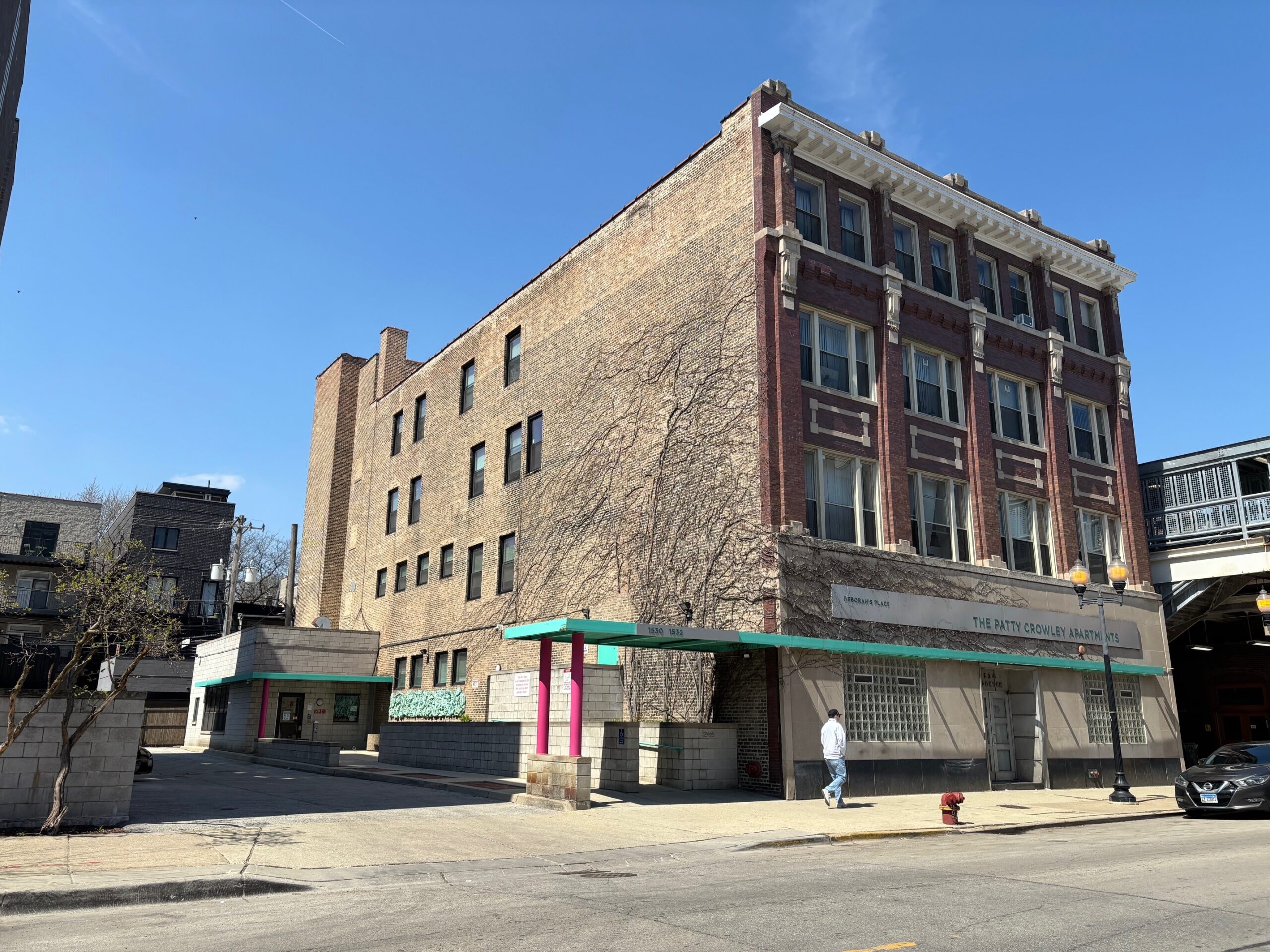
Share on facebook Share on facebook Share on facebook Share on facebook Share on facebook Share on facebookStrategies for Thinking Beyond the Replacement Reserve – Deborah’s Place Case Study
How Deborah’s Place Approaches Managing and Upgrading their Aging Properties
Deborah’s Place is the largest provider of Permanent Supportive Housing (PSH) in Chicago exclusively serving unaccompanied women who are experiencing homelessness. They serve more than 600 women a year with the following goal: once a woman comes to Deborah’s Place, they will never experience homelessness again. Deborah’s Place cares for their properties in a way that many providers strive to do. They use all the benefits of being a non-profit in finding creative approaches like philanthropy and volunteers to address and resolve challenges to keep their properties updated and well maintained. It is apparent in their housing stability outcomes that tenants like where they live and the services that come along with it, since Deborah’s Place maintains a 96% housing retention rate.

Share
Share on facebook Share on facebook Share on facebook Share on facebook Share on facebook Share on facebookChild Welfare Family Housing Voucher Briefs – Part 2
These briefs present information on federal housing voucher programs, such as the Family Unification Program (FUP), that child welfare and housing leaders can use to stabilize families through cross-sector partnerships. These briefs provide strategies for successfully administering FUP vouchers and identifying FUP eligible families. They also dispel common myths around the administration of FUP vouchers, so that these critical housing resources can be leveraged to to help strengthen families and keep children safe. Part 2 focuses on how to work successfully with housing partners to administer FUP vouchers for families.
Informes de cupones de vivienda familiar para el bienestar infantil
Estos informes presentan información sobre los programas federales de cupones de vivienda, como el programa de unificación familiar “Family Unification Program”(FUP), que los líderes de vivienda y bienestar infantil pueden utilizar para estabilizar a las familias a través de alianzas intersectoriales. Estos resúmenes brindan estrategias para administrar con éxito los cupones de FUP e identificar a las familias elegibles para FUP. También disipan los mitos comunes sobre la administración de los vales FUP, de modo que estos recursos de vivienda críticos puedan aprovecharse para ayudar a fortalecer a las familias y mantener a los niños seguros.
To access the Brief on Family Housing Vouchers – Part 1, follow the link below.

Share
Share on facebook Share on facebook Share on facebook Share on facebook Share on facebook Share on facebookSupportive Housing Operational Challenges – Survey Results
To better understand operational challenges and how supportive housing providers view them, CSH recently conducted a survey and received more than 500 responses from 44 states, D.C. and Puerto Rico. The survey responses make it clear that collectively we must act quickly to strengthen the supportive housing field. This report walks through the challenges that were elevated by respondents and concludes with ideas about solutions.

Share
Share on facebook Share on facebook Share on facebook Share on facebook Share on facebook Share on facebookLos Angeles Co-Lab – Summary Report
The Los Angeles Tenant Centered Collaboratory (Co-LAB) is an extension of CSH’s capacity-building efforts in the Western United States to improve the operations and fidelity to the core principles of quality supportive housing. The goal of the Co-LAB, supported by the Hilton Foundation, is to improve the quality of tenant-centered and high-quality supportive housing to focus our training and technical assistance (TA) on tenant outcomes, and to do so with the guidance of tenant leadership.
Background
In May 2021, the Corporation for Supportive Housing (CSH) launched The Los Angeles Tenant-Centered Co-LAB (Co-LAB) Training series. The training was designed as a collaborative, peer-to-peer learning environment for teams comprised of people with lived experience, housing developers/owners, services providers, and property manager partners that are within 1-3 years of leasing up their Los Angeles County supportive housing developments. Additionally, the purpose of the Co-LAB was to foster the co-creation of community environments centered on tenant choice, fairness, safety, and wellness. The Co-LAB also focused on navigating operational challenges common in the first year while ensuring tenant retention, promoting tenant leadership, and sustaining staff for long-term success.
Following the participation of the Co-LAB, participants were offered follow-up Technical Assistance (TA) for up to 18 months (TA provided at 6 months, 12 months, and 18 months). Technical assistance that was offered included: best practices on the coordination between supportive services and property management for quick lease-ups during the COVID-19 pandemic, assistance with understanding the developments pro-forma, budgeting for the lease-up process, and developing trauma-informed training for property managers.
Focus Groups
In 2023-2024, the Co-LAB hosted eight (8) Focus Groups that included representation from Los Angeles supportive housing developers, service providers, tenants, individuals with lived expertise of homelessness and working in homeless services, and property managers. The purpose of the Focus Groups was to 1) understand the perspectives and learning needs of each group, 2) to inform the Co-LAB curriculum development and 3) to guide how to support pressing training and technical assistance needs.
Below is a summary of each focus group type. The summary includes information about the focus group format, participants, and considerations for expanding access to quality supportive housing in Los Angeles County.

Share
Share on facebook Share on facebook Share on facebook Share on facebook Share on facebook Share on facebookBrief: Federal Housing Vouchers to Support Youth Transitions – Part 1
These briefs discuss how Family Unification Program (FUP) and Foster Youth to Independence (FYI) federal housing vouchers can support transition, wellbeing, and stability for youth/young adults’ transitions from foster care involvement with the child welfare system. Part 1 provides an overview of FUP and FYI vouchers. Part 2 offers a detailed guide to administering FUP and FYI vouchers for youth and young adults.
The publications were made possible in collaboration with Casey Family Programs, whose mission is to provide, improve – and ultimately prevent the need for – foster care.
Informe: Cupones federales de vivienda para apoyar a los jóvenes en edad de transición
Estos informes analizan como los cupones federales de vivienda en los programas programa de unificación familiar “Family Unification Program” (FUP) y el programa para jóvenes de crianza a la independencia “Foster Youth to Independence” (FYI) pueden apoyar la transición, el bienestar, y la estabilidad de los jóvenes y adultos jóvenes en su transición del cuidado temporal con el sistema de bienestar infantil. La parte 1 resume una descripción general de los cupones FUP/FYI. La parte 2 presenta una guía detallada para administrar los cupones de FUP y FYI para los jóvenes y adultos jóvenes.
Las publicaciones fueron posibles en colaboración con Casey Family Programs, cuya misión es brindar, mejorar y, en última instancia, prevenir la necesidad de cuidado de crianza.
To access the Youth Housing Voucher Brief – Part 2, please follow the link below.

Share
Share on facebook Share on facebook Share on facebook Share on facebook Share on facebook Share on facebookBackground Screening Process: Template and Guidance
This template is a resource for housing providers and property managers to use as they implement a background screening process that improves fairness and lowers barriers for people who have historically been excluded from housing opportunities.
The template can be used as is or adjusted to suit the needs of the community.
While the most fair and efficient process for filling housing units would be to eliminate background checks entirely, or use a policy that is the least restrictive possible, this template can help housing providers create a process that aims to improve fairness if they do opt to utilize a background screening.

Share
Share on facebook Share on facebook Share on facebook Share on facebook Share on facebook Share on facebookBrief: Federal Housing Vouchers to Support Youth Transitions – Part 2
These briefs discuss how Family Unification Program (FUP) and Foster Youth to Independence (FYI) federal housing vouchers can support transition, wellbeing, and stability for youth/young adults’ transitions from foster care involvement with the child welfare system. Part 1 provides an overview of FUP and FYI vouchers. Part 2 offers a detailed guide to administering FUP and FYI vouchers for youth and young adults.
The publications were made possible in collaboration with Casey Family Programs, whose mission is to provide, improve – and ultimately prevent the need for – foster care.
Informe: Cupones federales de vivienda para apoyar a los jóvenes en edad de transición
Estos informes analizan como los cupones federales de vivienda en los programas programa de unificación familiar “Family Unification Program” (FUP) y el programa para jóvenes de crianza a la independencia “Foster Youth to Independence” (FYI) pueden apoyar la transición, el bienestar, y la estabilidad de los jóvenes y adultos jóvenes en su transición del cuidado temporal con el sistema de bienestar infantil. La parte 1 resume una descripción general de los cupones FUP/FYI. La parte 2 presenta una guía detallada para administrar los cupones de FUP y FYI para los jóvenes y adultos jóvenes.
Las publicaciones fueron posibles en colaboración con Casey Family Programs, cuya misión es brindar, mejorar y, en última instancia, prevenir la necesidad de cuidado de crianza.
To access Part 1, please continue to through the link below.
Share
Share on facebook Share on facebook Share on facebook Share on facebook Share on facebook Share on facebookHousing and Services to Preserve Native American Families with Child Welfare Involvement: Themes and Recommendations from Native American Partners
In the summer and fall of 2022, CSH and Casey Family Programs hosted a virtual talking circle and a series of subsequent conversations with Native American leaders, service providers and families from across the United States that work in the fields of child welfare, Indian Child Welfare Act and supportive housing. These conversations were led by Patty Beech Consulting, and focused on how to better connect quality, affordable housing and supportive services to Native American families who are at-risk of being separated or who have child welfare system involvement and are facing homelessness or housing instability.