Since 2020, CSH has used our Los Angeles Supportive Housing Loan Fund to test an important question: Can modular construction meaningfully reduce the time and cost required to deliver supportive housing at scale?
This work began in response to the City of Los Angeles’ 2019 Housing Innovation Challenge, a $120 million initiative designed to encourage new approaches to accelerate housing production. CSH partnered with BlueHub Capital to support this effort, providing acquisition, predevelopment, and construction financing for a pipeline of modular projects. Along the way, we have not only deployed capital, but we have also refined how we underwrite modular deals and learned what it takes to make these projects successful.
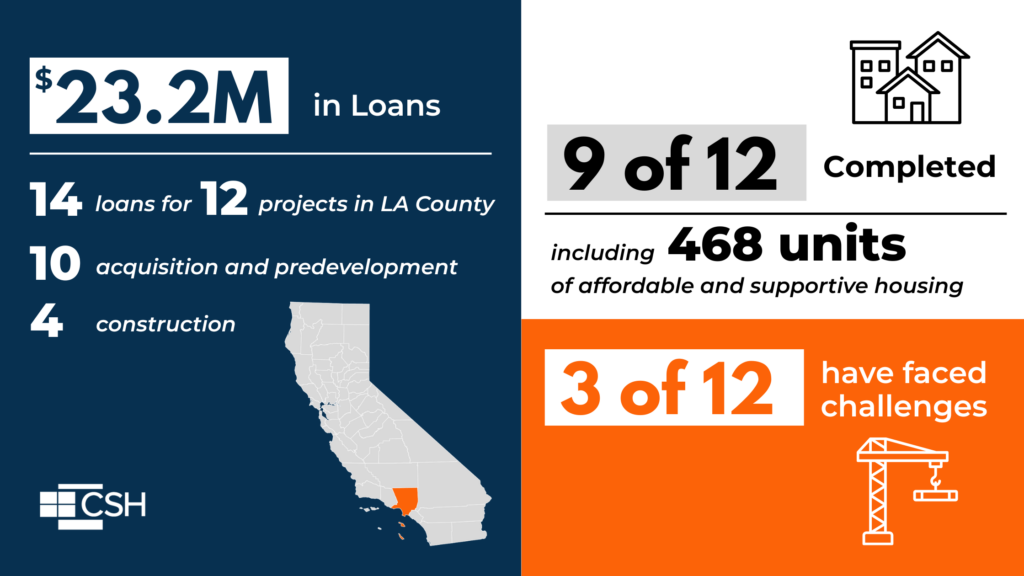
Since 2020, CSH has invested over $23 million in predevelopment, acquisition and construction financing for developments using modular construction methods.
A Portfolio Designed to Test Innovation
From 2020 through 2025, CSH supported a cohort of modular developments across Los Angeles County. Projects were initially selected based on strong financing and support from the City of Los Angeles.
Over time, the cohort showed that the greatest time and cost savings were achieved by projects that combined streamlined financing, standardized design, coordinated permitting and expediting, and experienced development teams. These outcomes were often reinforced through collaboration and replication: shared project teams, cross-site coordination, and financing partners working across multiple deals to reduce complexity.
Two projects in particular demonstrate how these factors translate into measurable results.
Project Spotlight: Western Landing
Harbor City, CA | 81 units
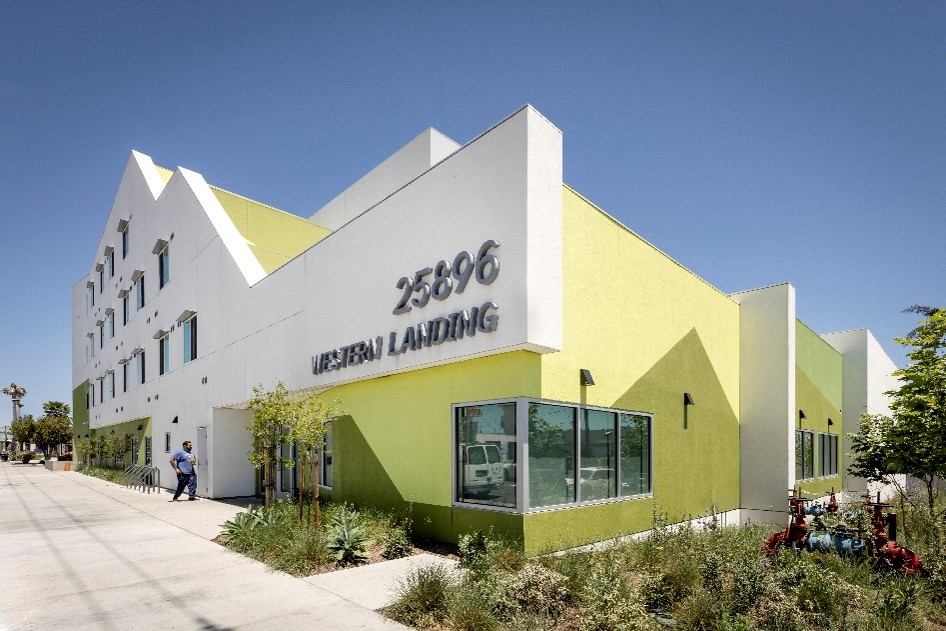
Western Landing, developed by Abode Communities, represents one of the strongest examples of modular success within the portfolio.
- CSH investment: $5.6 million (acquisition & predevelopment, with BlueHub Capital)
- Construction timeline: 16 months
- Total development cost: $49.7 million (~$613,580 per unit)
Abode Communities’ second modular project, Western Landing benefited from lessons learned on earlier developments. By maintaining alignment across the design team, manufacturer, property management, and service delivery partners, the project achieved both time savings and cost efficiencies, helping establish a replicable model for future developments.
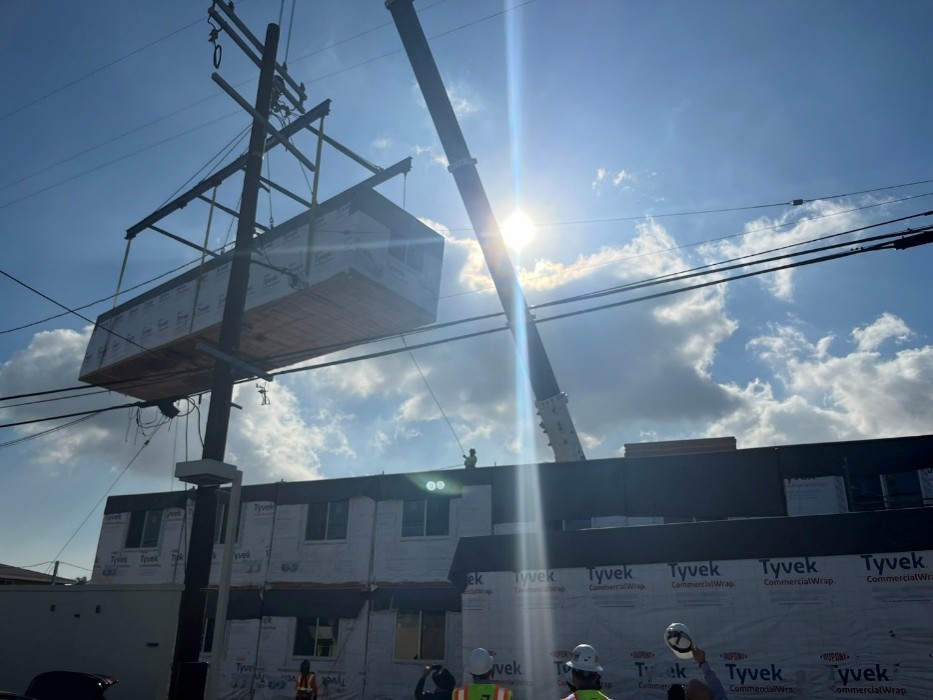
Project Spotlight: Sherman Way
Los Angeles, CA | 64 units
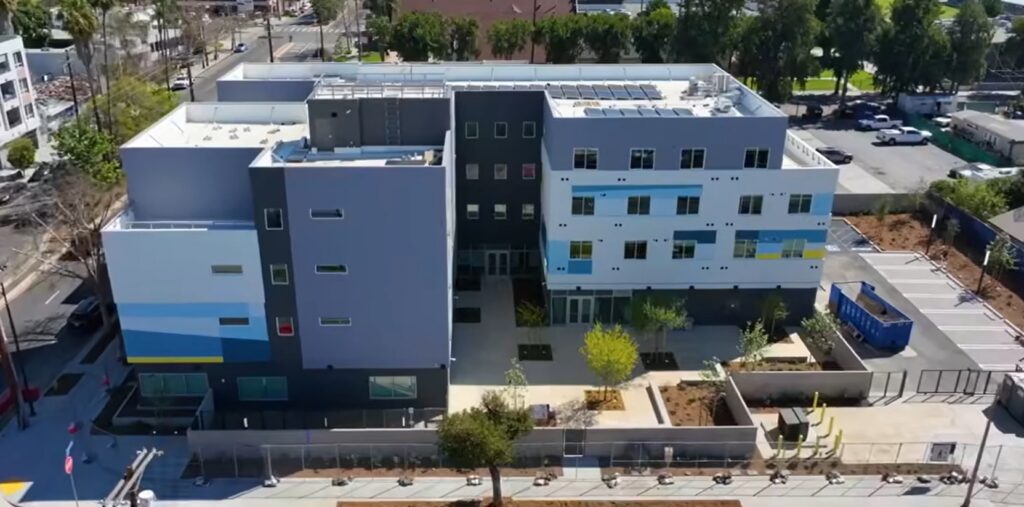
Sherman Way, developed by LA Family Housing, followed a similar approach and achieved similarly accelerated timelines.
- CSH investment: $5.8 million (acquisition & predevelopment, with BlueHub Capital)
- Construction timeline: 16 months
- Total development cost: $46.3 million (~$723,438 per unit)
- Status: Lease-up, with grand opening expected Fall 2026
The project was initially designed to mirror Western Landing’s model, using the same design team and modular manufacturer. However, when the original manufacturer underwent internal restructuring, the development team pivoted quickly to a new partner to maintain momentum.
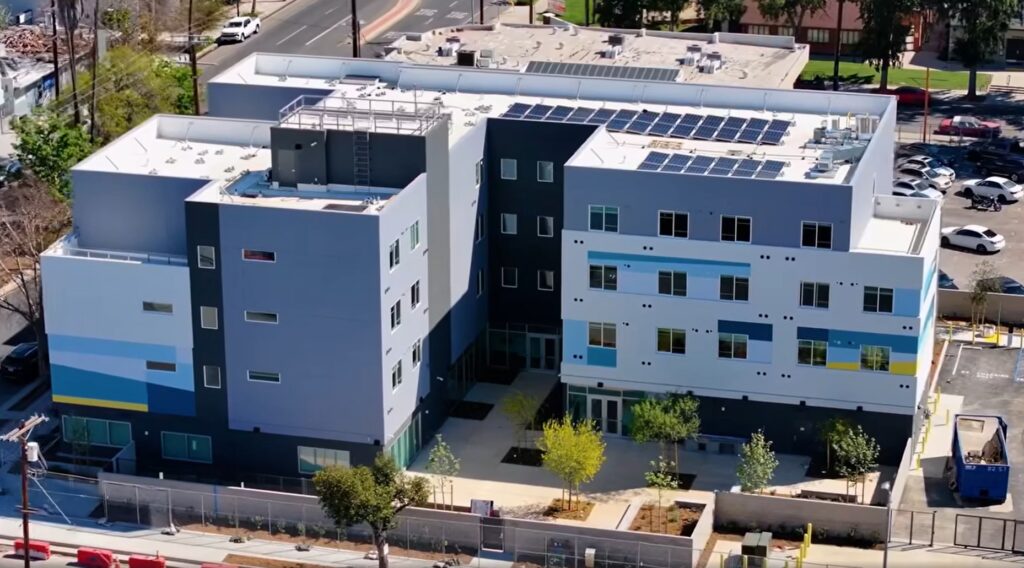
This experience highlights both the flexibility required in modular development and one of the sector’s key risks: manufacturer instability.
What Worked: Early Signals of Success
Since 2020, CSH has underwritten 14 loans across 12 modular developments in Los Angeles County, deploying capital at multiple stages of the development lifecycle. This includes 10 acquisition and predevelopment loans to help projects get off the ground, as well as 4 construction loans to address late-stage financing gaps driven by rising costs. To date, 8 of the 12 projects have been completed, delivering 468 units of affordable and supportive housing, providing an early but important proof point that modular construction, when paired with the right financing, local permits coordination, and partners, can help bring housing online more quickly.
Across the portfolio, several consistent themes emerged:
- Accelerated construction timelines
Several projects reduced construction to approximately 16 months, compared to the typical 18–24 months for similar developments.
- Shortened predevelopment phase
Timelines were compressed to roughly 22 months, versus 36 months or more, due to early-stage financing, upfront modular deposits, and coordinated project planning.
- Strategic use of early capital
Access to acquisition and predevelopment financing enabled developers to move quickly, while funding for modular deposits helped expedite manufacturing and construction timelines.
- System-wide coordination improved efficiency
Alignment across developers, lenders, and City agencies—particularly around permitting and design approvals—helped projects advance more quickly.
- New financing tools unlocked progress
The creation of new financing tools helped address a critical early barrier to modular development. CSH’s Supportive Housing Loan Fund, alongside LA LISC’s Modular Housing Fund (developed with philanthropic partners), provided early-stage capital for land acquisition, pre-development activities and modular deposits, giving construction lenders time to get comfortable and allowing projects to move forward during predevelopment.
While these outcomes demonstrate the potential for modular construction to accelerate housing delivery, they were made possible in part by critical early interventions led by CSH and CDFI partners, including LA LISC. These efforts helped fill key financing gaps and de-risk projects at pivotal moments. At the same time, this work has surfaced important lessons about the risks and complexities that must be addressed to scale this approach effectively.
What We Learned: Key Risks and Considerations
While modular construction shows real promise, our experience also underscores that it introduces new complexities. These lessons are now central to how CSH evaluates and structures future investments.
1. Manufacturer Stability Is a Systemic Risk
One of the most significant challenges we observed was the instability of modular manufacturers.
A major California manufacturer underwent a structural transition during the development of one of our projects, forcing teams to pivot midstream. More broadly, modular factories often struggle to remain financially viable without a steady pipeline of projects, which can lead to closures, restructuring, or changes in delivery timelines.
CSH now places greater emphasis on:
- Evaluating manufacturer pipelines and financial health
- Understanding production capacity and backlog
- Assessing contingency plans if a manufacturer fails to deliver
Encouragingly, California policymakers are considering proposals to create insurance backstops for factory-built housing, which would help mitigate this risk at a system level.
2. Coordination Across Teams Is Critical
Modular construction requires a higher degree of coordination than traditional building.
Developers consistently cited misalignment between design teams, manufacturers, and general contractors as a top challenge. Because modular units are fabricated off-site while site work occurs simultaneously, any disconnect can result in delays or costly redesigns.
The strongest-performing projects:
- Used teams with prior experience working together
- Integrated modular considerations into design from the outset
- Maintained clear communication across on-site and off-site workstreams
As a result, CSH now requires more detailed vetting of team experience and works closely with developers to strengthen team composition during underwriting.
3. Storage and Transportation Risks Must Be Managed
Three projects in the portfolio experienced water damage to modular units during on-site storage, before roofing systems were installed.
These incidents:
- Triggered millions of dollars in insurance claims
- Delayed construction timelines
- Highlighted vulnerabilities during the period between delivery and installation
Projects that successfully avoided these issues planned for:
- Robust waterproofing strategies
- Efficient sequencing to minimize onsite exposure
- Clear protocols for transport and storage
Going forward, CSH works with developers to evaluate these logistics early in the process.
4. Permitting and Inspections Are Improving—But Still Evolving
All projects in this portfolio were in Los Angeles, providing a consistent regulatory environment, but also revealing how local processes are still adapting to modular construction.
Positive developments include:
- Increased familiarity among city departments
- Faster inspections as agencies gain experience
- State-level support through California’s Factory Built Housing Program
At the same time, developers continue to face:
- Inconsistent interpretations of building codes
- Delays tied to inspection coordination
In response, California has introduced several policy proposals aimed at:
- Standardizing building code interpretations statewide
- Allowing developers to use state-certified inspectors
- Aligning local requirements more closely with state standards
5. Insurance Costs Are Rising
Insurance has emerged as a growing cost pressure across all affordable housing, but particularly for modular projects.
Builder’s risk insurance has become:
- More expensive
- More difficult to obtain
This is largely due to concerns about water damage and construction-phase risks. Projects must now:
- Budget for higher premiums and deductibles
- Plan for potential delays tied to claims
- Engage insurers early in the development process
Looking Ahead: Policy Momentum and Market Potential
California continues to position itself as a leader in housing innovation. As of 2026, policymakers are advancing a suite of proposals to support factory-built housing, including:
- Standardizing building codes across jurisdictions
- Reducing module transportation costs
- Expanding access to experienced inspectors
- Creating insurance protections tied to manufacturer risk
- Aligning state funding programs with modular development needs
These efforts reflect a growing recognition that, while modular construction is not a universal solution, it can play a meaningful role in addressing the state’s housing shortage.
Five years into this work, one conclusion is clear: Modular construction can deliver real time savings, but only when supported by strong partnerships, coordinated systems, and proactive risk management.
For CSH, these lessons are already shaping how we invest, ensuring that future projects not only move faster, but are also better positioned to succeed.