CSH applauds Governor Whitmer and the state legislature for their continued bipartisan support of this funding, which has delivered measurable results, helping more than 1,800 individuals secure and maintain housing while accessing supportive services.
Michigan Governor Gretchen Whitmer signed the FY27 state budget this week, which includes a $5 million investment in supportive housing services to help individuals and families achieve long-term housing stability. Administered by the Michigan Department of Health and Human Services, the funding will enable supportive housing providers statewide to add capacity and provide intensive, person-centered services to residents. Supportive housing combines stable, affordable housing with services for people with disabilities and long histories of homelessness. It is a proven, accountable, and cost-effective approach to lasting stability.
This funding follows previous appropriations totaling $31 million for supportive housing services between FY2023 and FY2026. The impact of that investment is measurable, transparent, and already evident: 98% of residents served through this funding have remained stably housed, and 63% have maintained or increased their income. These results show that when people receive the help they need, they can break the cycle of homelessness, achieve better health outcomes, and reduce reliance on costly public systems. State lawmakers are making public investments that produce lasting stability while reducing reliance on more expensive emergency and crisis services.
CSH thanks state Senators Jeff Irwin, Sylvia Santana, and Sarah Anthony, state Representative John Roth, and House and Senate leadership for their continued bipartisan support for this impactful investment.
CSH is also grateful to all the individuals and organizations in the state who have advocated for supportive housing, in particular, Avalon Housing, Communities First, Faith in Action, Goodwill of Northern MI, ICCF Community Homes, and Room at the Inn, all of which hosted tours for legislators this year or provided committee testimony.
“Every dollar Michigan invests in supportive services goes toward something measurable: helping people obtain stable housing and build healthier, more secure futures,” said Catherine Distelrath, Michigan Director at CSH. “We look forward to continuing our partnership with state leaders, providers, and advocates to expand these measurable results across the state.
On June 19th, just days before the 27th anniversary of the Supreme Court’s decision in Olmstead v. L.C., the Department of Justice (DOJ) issued a memo advancing an interpretation of the Olmstead decision that breaks from decades of established precedent. The memo questions whether the Olmstead decision requires states to serve people with disabilities in the most integrated setting appropriate to their needs. As the DOJ acknowledged, the new interpretation is out of step with how federal courts have understood Olmstead since 1999.
CSH is deeply concerned about this departure. Defending and advancing Olmstead is central to our work. The core principle— that people with disabilities should be able to live, work, and thrive in the community of their choice — is the foundation of supportive housing. At its heart, Olmstead recognized that no one should be cut off from their families, friends, and people they love simply to receive the care they need.
Olmstead has shaped how states support people with disabilities for nearly three decades. Courts across the country have consistently affirmed its core principle: that unnecessary isolation is a form of discrimination. That principle has guided state investment and practice. It has moved systems toward community-based housing and services that help people achieve stability, health, and independence.
This does not mean that treatment and housing are at odds. Some people, at some point in their lives, need intensive clinical care, including time-limited stays in hospitals or residential settings. A strong system includes that full continuum, but those settings work best as a bridge to stable community living, not a substitute for it. The choice is not between treatment and housing. Both are essential, and neither works in isolation.
The harder truth is that legal standards are only part of what stands between a person and a life of their choosing in the community. America faces a severe shortage of affordable housing and wide gaps in access to care. Efforts to expand access to evidence-based treatment supports, particularly community-based models, would be more effective than focusing on compelling services that simply are not available. These realities do more than any legal interpretation to determine whether someone with any disability including serious mental illness stays housed or falls into homelessness. Without a stable home, too many people either languish in institutional care or leave institutional care only to cycle back through emergency rooms, shelters, and jails.
Our FUSE work had demonstrated for more than two decades that when communities prioritize intensive services with housing, even people with the most complex needs find stability and recovery while communities enjoy reduced homelessness and costs associated with institutionalization.
North Carolina shows what is possible and what it takes to ensure that people have freedom of choice and the opportunity to thrive. Before 2012, the state relied on large, segregated adult care homes to serve people with serious mental illnesses. Those conditions resemble what this memo would now treat as legally acceptable. The DOJ found that this reliance violated the ADA and Olmstead, and that the resulting agreement required the state to build supportive housing and community-based services.
Building that capacity took the state more than a decade, several extensions, and sustained public investment, and the work continues today. The work required new levels of cross-sector collaboration between the housing and health sector state and community leaders. That investment has helped thousands of North Carolinians leave institutional settings for homes of their own.
The DOJ memo targets the very tool that drove progress. North Carolina’s problem was a shortage of housing and services. The legal expectation to integrate is what finally pushed the state to address the shortage. Removing that expectation, while the capacity gap remains, abandons people in the middle of a transition that is finally helping them.
Stepping back from community-based housing and services will push more people, and more cost, onto public systems. Institutional and crisis care is much more expensive than supportive housing, by many estimates more than three times as much per person. Without stable housing to exit to, that spending recirculates through repeated hospitalizations, law enforcement contacts, and time in jail, with little lasting stability to show for it.
The evidence of the last quarter century points in one direction. Supportive housing and community-based care improve health, strengthen communities, and reduce reliance on costly crisis systems. As policymakers and state leaders study this memo, the strongest path forward is to follow the evidence and build on community integration for people with disabilities by: expanding supportive housing, strengthening access to mental health and substance use care, and ensuring a full continuum of support that meets people where they are.
CSH remains committed to working with federal, state, and local partners so that every person has access to safe, stable housing and the support they need to thrive in the community.
The projects will serve more than 250 residents through innovative initiatives that tackle complex health, substance use, and aging challenges.
The Challenge: Rising Acuity Among Supportive Housing Residents
Over the last five years, New York City’s supportive housing system has been stretched by a growing number of people experiencing homelessness who need more intensive, coordinated support to stay housed.
More people are experiencing prolonged homelessness due to obstacles in accessing health care, housing, and community-based services. Many individuals entering or living in supportive housing are navigating complex trauma and health conditions, often without consistent access to coordinated and person-centered care.
Supportive housing providers have seen a drastic rise in serious health challenges for their residents. At the same time, the population within supportive housing is aging. Older adults, age 50+, now represent the fastest-growing group of New Yorkers facing housing instability, with many entering homelessness and crisis systems for the first time. Providers are struggling to support aging residents who have lived with substance use disorder for decades, often experiencing cognitive decline and aging issues nearly 20 years earlier than those who have never been homeless.
The COVID-19 pandemic also led to the closure of many nonprofit service providers, and the sector continues to feel the devastating impact of a critical service infrastructure that has been reduced in scale. Further, the sector has received insufficient public and private investments to meet the needs at the required scale.
CSH’s Response: A Multi-Year Initiative
Funded by a three-year grant from The Leona M. and Harry B. Helmsley Charitable Trust, CSH launched a three-phased project to both identify service gaps and surface solutions that better address the needs of supportive housing residents with complex health challenges in New York City (NYC). CSH’s NYC metro team, led by Lauren Velez, launched this project by engaging teams of collaborators and advisors on key phases of the project: starting with establishing partnerships with network leaders at The Supportive Housing Network of New York (the Network) and The Health and Housing Consortium to bring their expertise and membership’s perspectives to the project; followed by convening an advisory committee for input and feedback that includes providers, government leaders, and people with lived expertise.
The first official phase of the project was to complete a full landscape assessment aimed at understanding the local and national challenges, and opportunities to serving this population in the supportive housing field.
Informed by and in response to these findings, Phase Two included the creation and announcement of a competitive RFP to solicit ideas with the most promise to improve the service levels in the sector to better meet these unmet needs. In November 2025, CSH selected four proposals to be the pilot projects for the “High Health Acuity in Supportive Housing Initiative”, awarding a total of $1,000,000 in grants over 2 years. The selected pilot projects will holistically address the high acuity health needs of supportive housing residents through increased capacity and innovative interventions.
Evidence Towards Innovation
Phase Three of this project involves CSH choosing and engaging an evaluation partner, L&G Research and Evaluation Consulting, Inc., to evaluate learnings from the initiative and, together with CSH’s deep expertise in the field, and the input from their expert advisory committee, coordinate the evaluation for the pilots projects with an eye towards opportunities for scaling and sustainability for those that are successful. The evaluation partner will also develop education materials to share with policy makers and other stakeholders.
“I couldn’t be more excited about this initiative as it combines grant funding with CSH’s tailored technical assistance and policy expertise to help providers better support residents living with multiple co-occurring physical and behavioral health conditions,” said CSH NYC Metro Director, Lauren Velez. “Pilot programs test innovations that include hiring additional specialized staff, implementing flexible service models, and strengthening collaboration across homelessness and health systems. We need to reimagine our investment in supportive housing services. Cost effective measures don’t mean that we can fail to provide adequate funding- it means that the return on that investment is greater and more stable than alternatives. “
Private funding is often needed to create the evidence and testing needed to advocate for public adoption. “A project like this with three important ingredients of evidence-based innovation – research, testing, and evaluation – bolstered by the deep bench of expertise from CSH and their partners to find solutions to this growing challenge for New Yorkers living with complex health issues in Supportive Housing, is one of the strongest doses of philanthropic support that we could apply to the problem,” said Tracy Perrizo, NYC Program Officer from the Leona M. and Harry B. Helmsley Charitable Trust. The project’s aim is to show why making the necessary investments to meet these needs at scale is smart and cost-effective policy. Decades of research have proven that supportive housing offsets public costs of crisis systems and creates safe, thriving communities.
“This project gives us the ability to explore the impact of interventions that are truly person-centered, responsive to need, and properly funded on the overall health and well-being of high-need supportive housing tenants,” added Velez.
Meet the Four Pilot Projects
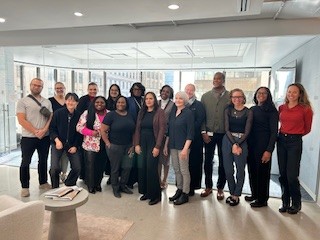
Staff representing four organizations selected for the pilot gathered at CSH’s national headquarters in New York City in November, 2025.
CSH and evaluation partners selected these four organizations from an extremely competitive applicant pool of New York City supportive housing providers.
Alliance for Positive Change
Alliance for Positive Change will integrate a housing-focused social worker to provide comprehensive clinical support services to residents of their Bronx supportive housing building. Residents have complex health needs including HIV and other chronic illnesses, mental health concerns, aging issues, and other challenges. The new full-time staff member will provide frequent, one-to-one counseling to improve residents’ financial skills, apartment-care skills, self-efficacy, and independence.
Lantern
Lantern’s Adapted-Intensive Case Management (A-ICM) pilot project will adapt the most effective elements of the traditional Intensive Case Management (ICM) model to make it more sustainable and scalable for organizations with limited resources. Case managers will receive training to support residents with complex needs through intensive services. Within the A-ICM model, services will include needs assessments, referrals and warm handoffs, health navigation, and accompaniment to health appointments. The pilot also includes hiring new Tenant Peer Navigators who will leverage their lived expertise to help residents navigate complex health systems.
Project Renewal
Project Renewal’s High-Acuity Response Team (HART) project will pilot a care team consisting of a nurse care manager and occupational therapist who will support their highest-need supportive housing residents. The new full-time staff members will manage a shared caseload to serve residents with complex needs including substance use, serious mental illness, aging, generational trauma, and/or chronic health issues. This pilot project will bring coordinated in-house care that specializes in complex needs, while increasing capacity for frontline staff who are strained in supporting 100 of their highest need residents across multiple supportive housing sites.
St. Nicks Alliance
The St. Nicks Alliance project will pilot a new mobile Wellness Outreach Team to support residents of their scattered-site supportive housing program. Tenants living in scattered-site supportive housing can be more difficult to reach, as they live in units rented from private landlords throughout the city. This multidisciplinary team will conduct comprehensive in-home assessments and provide ongoing support services including medication management, behavioral health support, and health education. This new team will coordinate with existing case managers and be integrated with community providers to facilitate warm hand-offs when clients stabilize. The outreach team plans to serve around 60 tenants during the pilot period.
Supportive housing combines affordable housing with supportive services to help people who face the most complex challenges live with stability, autonomy, and dignity. CSH created these standards to guide a wide range of groups—including tenant leaders, housing developers, landlords, service providers, funders, property managers, government officials, and health care organizations—to work together to build and operate high-quality supportive housing.
The Quality Standards apply to all types of projects, whether site-based or scattered-site, and in rural, suburban, or urban areas. How the standards are put into practice may vary due to the diversity of supportive housing models.
Produced by CSH in collaboration with Invisible People, Returning Home premiered this week on YouTube and features candid interviews with supportive housing tenants, including those once on death row, as well as the case managers and landlords who support second chances. Prisons discharge people after serving their sentence often without an ID, job, or a home to return to, and the film reveals what happens in communities that prioritize housing and services to reduce street homelessness and the homeless-to-prison cycle.
“At a time when communities are grappling with rising homelessness, shrinking budgets, and a shortage of affordable housing, Returning Home delivers a clear message that supportive housing works,” said Deborah De Santis, President and CEO of CSH. “Time and time again, we have proven that supportive housing makes the difference in helping people thrive while being cost-effective. This film is a call to action for policymakers to invest in what truly makes communities safer and stronger.”
The film highlights CSH’s innovative Returning Home Ohio (RHO) and Community Linkage Program, administered in collaboration with the Ohio Department of Behavioral Health. With a recidivism rate of just 3% for tenants supported by RHO and 1.4% for those in Community Linkage, the results prove that supportive housing is effective at helping people stay housed long term and prevents them from engaging in criminal activity thereby making communities safer.
“We are grateful to our Ohio agency, housing, and services partners who have helped more than 2,300 people find stable housing and avoid returning to prison,” said Leah Werner, Director of CSH’s work in Ohio, Kentucky, and Tennessee. “As I say in the film, ‘providing access to housing and services is the formula.’ These programs prove that when we invest in people, we reduce recidivism and rebuild lives.”
The film premiered on YouTube on May 21.
Watch the trailer and learn more at: https://csh.org/returninghomefilm
This guide is for anyone who will be renting an apartment for the first time. The information here is intended to make the transition to this new lifestyle easier. In this guide book you will find helpful tips on apartment living like housekeeping issues, keys to a successful relationship with your landlord and other resources.