Share

Share on facebook Share on facebook Share on facebook

2025 State Cohort

Housing as a Foundational Element of Family Well-Being

Housing as a Foundational Element of Family Well-Being shares key insights and lessons from a six‑month national learning collaborative convened by Casey Family Programs, CSH (Corporation for Supportive Housing), and Chapin Hall. Developed in response to growing evidence that housing instability and family homelessness are major drivers of child welfare system involvement, the cohort created a shared learning space for state housing and child welfare leaders to align policy, practice, and resources in an increasingly complex funding and policy environment.

Cross-sector leadership teams from New Jersey, Colorado, Kentucky, and Oregon participated in peer learning, tailored technical assistance, and state‑hosted site sessions that highlighted innovations, surfaced challenges, and advanced practical solutions. By the end of the cohort, participants reported new ways of thinking about housing as a prevention strategy—reframing housing needs for decisionmakers, identifying cost‑saving opportunities, and exploring how to blend and braid funding to better support families. This brief captures those insights to inform policymakers, practitioners, and advocates working to strengthen family well‑being and prevent unnecessary child welfare involvement.

Share

Share on facebook Share on facebook Share on facebook

Announcing the 2026 Groundwork Teams: Advancing Youth Supportive Housing Across the Country

CSH is thrilled to announce the teams selected for the 2026 Groundwork: Youth Supportive Housing Development Training Series, a comprehensive four‑month virtual program designed to help communities turn early‑stage ideas into fully developed supportive housing concepts for youth and young adults.

This year’s Groundwork cohort brings together a diverse group of organizations—youth service providers, developers, system partners, and community leaders—who share a commitment to creating safe, stable, and supportive housing opportunities tailored to young people. Over the coming months, participants will engage in a dynamic learning experience that blends training, coaching, and collaborative project development.

About the Groundwork Training Series

Groundwork is a four‑month virtual learning and technical assistance program designed to help multi‑sector teams move a youth supportive housing concept from early vision to actionable plan. Through four live sessions, guided team meetings, individualized coaching, and optional office hours, teams build shared understanding, deepen partnerships, and clarify the steps needed to develop effective supportive housing for youth and young adults.

Participants explore model design, project development basics, system collaboration strategies, and role alignment. Youth and young adult engagement is strongly encouraged to ensure concepts reflect lived expertise and community needs.

Introducing the 2026 Groundwork Cohort

We are proud to welcome the following teams to this year’s Groundwork cohort:

  • Better Youth — Los Angeles, California
  • Child and Family Charities — Lansing, Michigan
  • Covenant House International — Dallas, Texas and Boston, Massachusetts
  • Emerging Phoenix — Richmond, Virginia
  • Living Waters Youth — Chicago, Illinois
  • Montana Continuum of Care Coalition
  • Zoe, Incorporated — Richmond, Kentucky

These organizations bring deep experience, passion, and insight from communities across the country. Over the next four months, they will work collaboratively with CSH and one another to strengthen their supportive housing concepts and build the partnerships necessary for long‑term success.

Why Groundwork Matters

Youth and young adults experiencing homelessness face unique challenges—and systems are often not designed to fully meet their needs. Supportive housing provides a stable, youth‑centered foundation for young people to thrive. By equipping communities with tools, knowledge, and a collaborative framework, Groundwork helps lay the foundation for impactful, sustainable solutions.

We look forward to supporting this year’s Groundwork teams as they bring transformative projects to life.


Share

Share on facebook Share on facebook Share on facebook

Policy Brief: How State Leaders Can Take Action to Keep Families Together and Support Youth Transitions

CSH estimates that there are approximately 90,000 families and youth in need of supportive housing, including 43,646 families with child welfare involvement. While lack of housing should not necessitate child welfare involvement, housing instability alongside additional challenges such as substance use or mental health needs can affect the overall placement decision. Access to permanent housing often means that families can stay together while receiving child welfare prevention services or reunify more quickly if children are in out-of-home care. Research has demonstrated that children and youth who have a reliable place to call home also spend fewer days in foster care, experience a reduction in subsequent abuse and neglect cases, reduce their risk of subsequent homelessness, and increase their school attendance.

Housing vouchers and rental assistance play a significant role in keeping families together and supporting youth in transitioning successfully into adulthood. While most housing vouchers are issued from the U.S. Department of Housing and Urban Development (HUD) via local Public Housing Authorities (PHAs) , there are many states that have funded voucher and rental assistance programs for families and transition age youth. States like New Jersey, California, Washington, and Colorado have all developed and funded housing assistance to support child-welfare involved families and youth.

UPDATED March 2026

Share

Share on facebook Share on facebook Share on facebook

CSH Quality Supportive Housing Standards

Supportive housing combines affordable housing with supportive services to help people who face the most complex challenges live with stability, autonomy, and dignity. CSH created these standards to guide a wide range of groups—including tenant leaders, housing developers, landlords, service providers, funders, property managers, government officials, and health care organizations—to work together to build and operate high-quality supportive housing.

The Quality Standards apply to all types of projects, whether site-based or scattered-site, and in rural, suburban, or urban areas. How the standards are put into practice may vary due to the diversity of supportive housing models.

Share

Share on facebook Share on facebook Share on facebook

CSH Statement on Senate Passage of the Reconciliation Bill

CSH Calls for Balanced Policy That Protects Both Housing and Health Supports

The Senate’s passage of the reconciliation bill presents a deeply mixed outcome for the supportive housing field. While we acknowledge the inclusion of important housing provisions such as expanding and making permanent the Low-Income Housing Tax Credits and the New Markets Tax Credit, we cannot overlook the harmful trade-offs embedded in this legislation.

These housing investments, while significant, are not sufficient to offset the damage caused by provisions that undermine access to essential healthcare and basic supports for people experiencing homelessness and housing instability. The bill imposes new barriers to Medicaid and nutrition assistance that will disproportionately impact individuals with complex health and housing needs. These are the very people supportive housing is designed to serve.

Supportive housing succeeds because it pairs affordable homes with the services that help people stay housed and maintain their health. When the government restricts access to those services, it weakens the entire model. Limiting state Medicaid funding tools, imposing burdensome recertification requirements, and expanding work requirements for vulnerable populations all threaten the stability and well-being of those we serve.

CSH remains committed to advancing effective policies that recognize the interconnectedness of housing, healthcare, and human services. We urge Congress to consider the full impact of this legislation, not just its housing investments, but also the barriers it creates for those most in need and the burdens it places on the communities in their districts. We will continue to work with partners across sectors to ensure that supportive housing remains a viable and effective solution to homelessness and housing insecurity.
 
Deborah De Santis
CSH President and CEO

Share

Share on facebook Share on facebook Share on facebook

November is National Youth Homelessness Awareness Month

Affordable housing paired with tailored support services prevents housing instability, addresses homelessness, and empowers young people to build healthy, thriving lives. When youth and young adults have a safe place to call home, along with supportive relationships and access to services tailored to their unique needs and aspirations, they can achieve housing stability and prevent homelessness.

A range of factors contribute to young people’s experiences of homelessness and housing instability. In particular, youth and young adults of color are disproportionally impacted by housing instability. Youth and young adults of color are also more likely to experience involvement with the child welfare system or foster care. Every year, more than 20,000 youth and young adults age out of foster care. Research shows that these young people are at very high risk for experiencing homelessness. Between 31%-46% of these young people will experience homelessness before the age of 26.

Creating Housing and Services Opportunities for Youth and Young Adults 

Foster Youth to Independence Housing Vouchers & Family Unification Program Vouchers for Youth 

Both the Foster Youth to Independence (FYI) and Family Unification Program for Youth provides an up to 36-month housing voucher for youth ages 18 through 24 years who:  

  • Left foster care at age 16 or older or will leave foster care within 90 days through the formal child welfare transition plan, and 
  • Is experiencing or is at risk of experiencing homelessness. 

These vouchers can be extended for up to 60 months if certain criteria are met. Also, housing authorities can apply to access youth housing vouchers from HUD “on demand” and whenever opportunities for competitive applications are announced.

The Need for FYI by State and Housing Authorities Administering FYI 

National Alliance to End Homelessness has created maps to show: 1) the rates of homelessness for young and young adults transitioning out of foster care, and 2) the percentages of housing authorities in each state that are accessing FYI vouchers. You can also view the resources below for additional information about housing authorities that administer FYI vouchers.

Action Steps

Steps for child welfare and housing sector leaders to better leverage FYI and FUP vouchers

    • Understand the need for FYI vouchers in your state and identify a housing authority and child welfare partner to discuss increasing access to FYI vouchers in your community

    • Invite your local partners to discuss the need and strategies to access and utilize FYI vouchers

Creating and Improving Supportive Housing and Affordable Housing for Youth and Young Adults 

Over the last five years, CSH’s lending and community investment has supported the creation of 631 permanent supportive housing units and 606 affordable housing units dedicated to youth and young adults. These new affordable and supportive housing units are located across the country – from California to New York, Georgia to Indiana, and Washington State to Maryland. 

CSH also provides technical assistance to youth-specific developments, such as Arlington Drive in Tacoma, WA. In New Jersey, CSH worked closely with the New Jersey Department of Children, Youth and Families to create this resource guide around working with youth and young adults.

Additional information on CSH’s work to support both youth and families can be found here: Youth and Families – Housing and Cross-Sector Solutions – Corporation for Supportive Housing 

Action Steps

Steps for child welfare and housing leaders to create and improve housing opportunities for youth

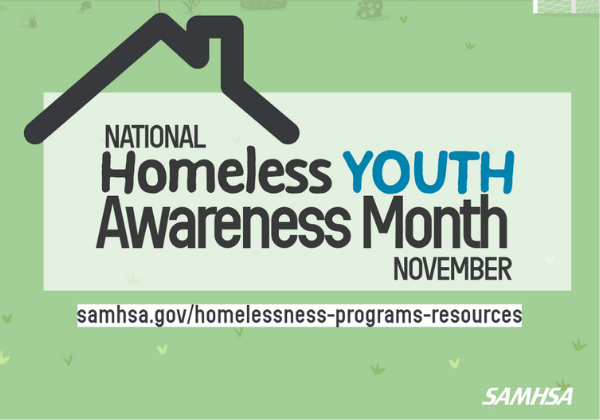
SAMHSA has programs and resources to help prevent and end homelessness, including among youth with mental health or substance use disorders.

National Youth Homelessness Awareness Month 2024 graphic which directs people to SAMHSA's resources.