

Supportive housing is a critical solution to homelessness, but much of the nation’s existing supply is at risk. This April 2026 briefing from CSH highlights the growing crisis facing supportive housing properties, including deferred maintenance, rising operating costs, and limited funding options. Drawing on examples from states and localities across the country, the report outlines promising preservation strategies—such as grants, low-interest financing, and targeted programs—to stabilize and sustain these vital homes. With preservation far more cost-effective than new development, this resource offers actionable insights for policymakers and practitioners working to protect supportive housing and prevent further loss.
Geography: New York

Share
Share on facebook Share on facebook Share on facebook Share on facebook Share on facebook Share on facebook2025 New York Institute Yearbook
The first New York Supportive Housing Institute, a signature initiative of CSH, brought together a cohort of emerging developer teams for intensive and interactive workshops covering all aspects of creating quality affordable and supportive housing. The Institute provided tools and support to help teams build their project plans and convert them into reality.
Mentorship was a core component of the NY Institute. Each team was connected with a mentor who had deep expertise in affordable and supportive housing development in New York. Teams graduated from the Institute with a housing development plan and a path for acquiring funding. The cohort will collectively produce more than 400 new affordable and supportive homes across NYC, Long Island, and Westchester. The Institute ran from January 2025 until September 2025.
We extend our deepest thanks to all our sponsors, especially Deutsche Bank, whose generous support made this initiative possible.
Share
Share on facebook Share on facebook Share on facebook Share on facebook Share on facebook Share on facebook2025 CSH Community Investment Year in Review
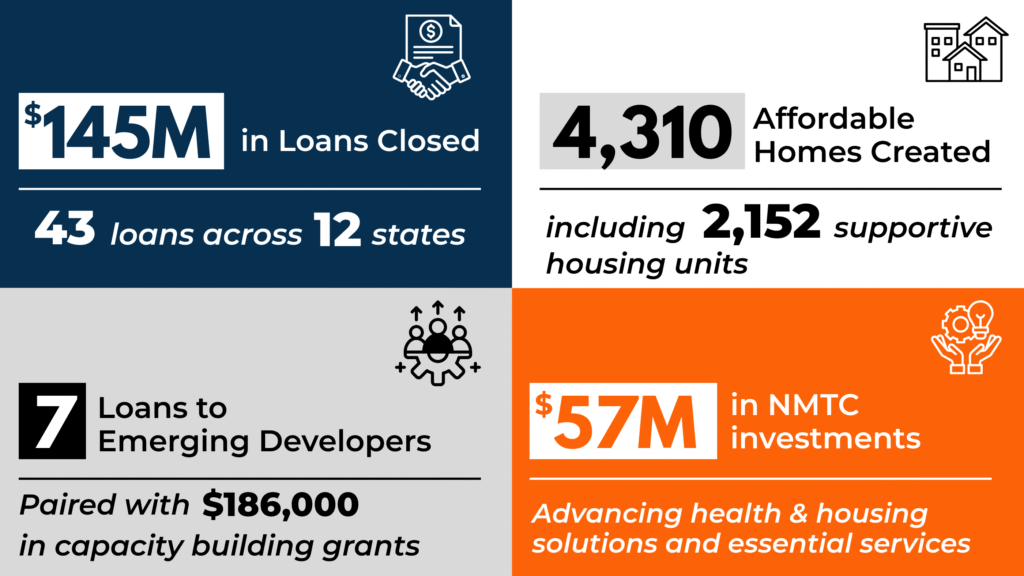
A look at how CSH deployed $202 million to advance supportive housing in 2025
In 2025, CSH’s Community Investment team deployed flexible, mission-driven capital to advance supportive housing and community-based health and service solutions nationwide. Through strategic lending and New Markets Tax Credit (NMTC) investments, we partnered with nonprofit and mission-aligned for-profit developers to expand access to affordable housing and essential services for people most impacted by homelessness.
2025 at a Glance
2025 Project Highlights
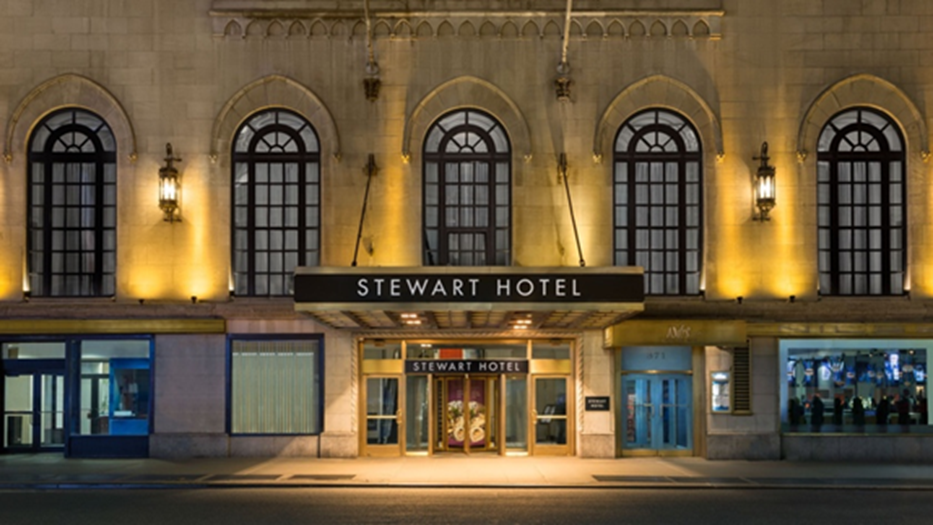
The Stewart Hotel | Manhattan, NY
A historic hotel reimagined as supportive housing in the heart of Manhattan
CSH provided $6.6 million in subordinate acquisition financing to support the transformation of the historic Stewart Hotel into 579 units of supportive and affordable housing. Developed by Breaking Ground and Slate Property Group, the project will dedicate 50% of units to formerly homeless people, with on-site supportive services.
The 31-story building, constructed in 1929, located across from Penn Station, includes space for social services and community use, with large unit layouts that support efficient conversion to high-quality supportive housing.
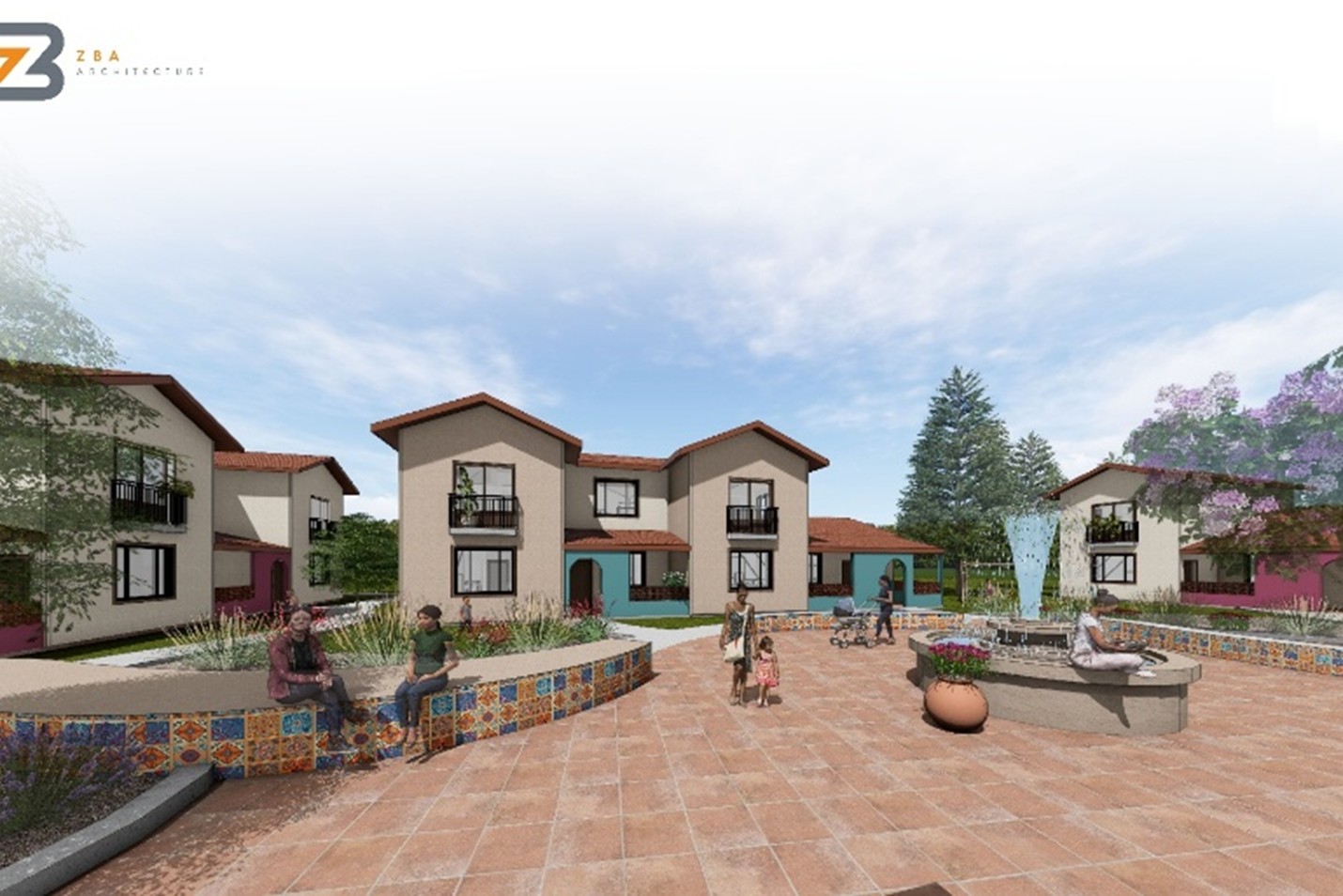
Casa MiA | Spokane, WA
Supporting an emerging developer with lived experience to bring supportive housing to Eastern Washington
CSH provided a $977,000 loan to MiA Mujeres in Action, an emerging developer led by staff and board members with lived expertise. CSH’s first loan in Eastern Washington will support the creation of 12 supportive housing units for women who are survivors of domestic violence.
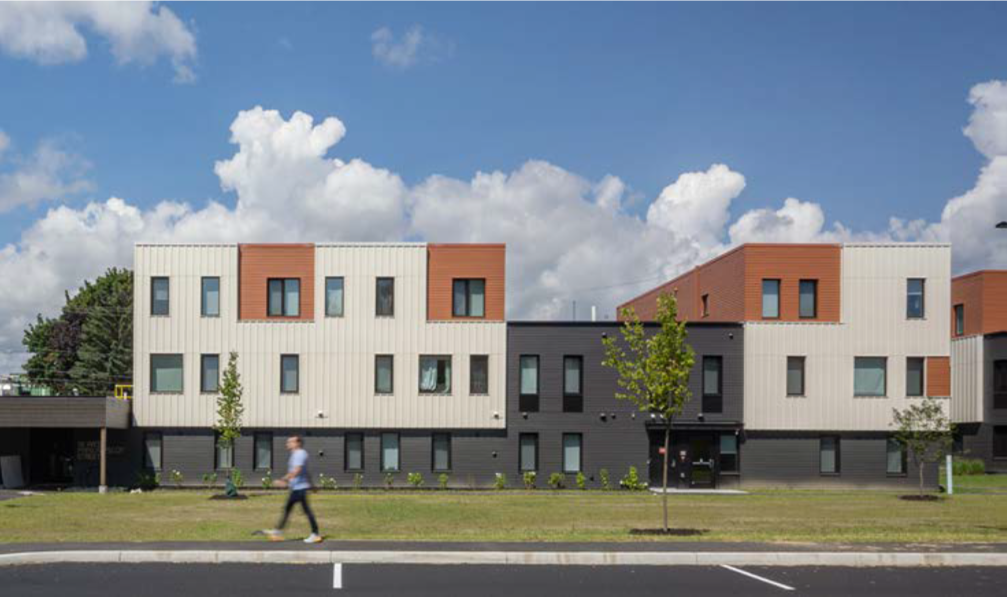
Bowdoin Street Senior Housing | Boston, MA
Aiding new senior housing with supportive units in CSH’s first Massachusetts investment
CSH provided a $3.85 million loan to nonprofit developer, Codman Square Neighborhood Development Corporation to support predevelopment and acquisition for new construction of a 50-unit senior housing development, including 13 supportive housing units for formerly homeless seniors. This project marks CSH’s first loan in Massachusetts.
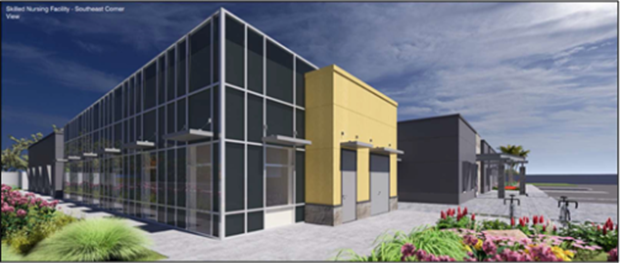
East Valley Medical Respite Center | Mesa, AZ
Advancing medical respite care and housing stability for people experiencing homelessness
CSH made a $15 million NMTC investment to support the development of the East Valley Medical Respite Center in Mesa, AZ, led by Circle the City, the only Federally Qualified Health Center in central Arizona that focuses exclusively on serving individuals experiencing homelessness.
The project will create a 30,000-square-foot facility with 85 medical respite beds, providing healthcare, behavioral health services, pharmacy access, and housing placement support, often offering clients their first safe place to recover after experiencing homelessness.
Looking Ahead to 2026
As we move into 2026, CSH remains committed to expanding access to capital for emerging developers, advancing supportive housing solutions, and investing in projects that strengthen housing stability, health, and community well-being nationwide.
Thank you for your continued partnership and support.
Share
Share on facebook Share on facebook Share on facebook Share on facebook Share on facebook Share on facebookCSH Selects Pilot Projects to Address High Acuity Health Needs in Supportive Housing
The projects will serve more than 250 residents through innovative initiatives that tackle complex health, substance use, and aging challenges.
The Challenge: Rising Acuity Among Supportive Housing Residents
Over the last five years, New York City’s supportive housing system has been stretched by a growing number of people experiencing homelessness who need more intensive, coordinated support to stay housed.
More people are experiencing prolonged homelessness due to obstacles in accessing health care, housing, and community-based services. Many individuals entering or living in supportive housing are navigating complex trauma and health conditions, often without consistent access to coordinated and person-centered care.
Supportive housing providers have seen a drastic rise in serious health challenges for their residents. At the same time, the population within supportive housing is aging. Older adults, age 50+, now represent the fastest-growing group of New Yorkers facing housing instability, with many entering homelessness and crisis systems for the first time. Providers are struggling to support aging residents who have lived with substance use disorder for decades, often experiencing cognitive decline and aging issues nearly 20 years earlier than those who have never been homeless.
The COVID-19 pandemic also led to the closure of many nonprofit service providers, and the sector continues to feel the devastating impact of a critical service infrastructure that has been reduced in scale. Further, the sector has received insufficient public and private investments to meet the needs at the required scale.
CSH’s Response: A Multi-Year Initiative
Funded by a three-year grant from The Leona M. and Harry B. Helmsley Charitable Trust, CSH launched a three-phased project to both identify service gaps and surface solutions that better address the needs of supportive housing residents with complex health challenges in New York City (NYC). CSH’s NYC metro team, led by Lauren Velez, launched this project by engaging teams of collaborators and advisors on key phases of the project: starting with establishing partnerships with network leaders at The Supportive Housing Network of New York (the Network) and The Health and Housing Consortium to bring their expertise and membership’s perspectives to the project; followed by convening an advisory committee for input and feedback that includes providers, government leaders, and people with lived expertise.
The first official phase of the project was to complete a full landscape assessment aimed at understanding the local and national challenges, and opportunities to serving this population in the supportive housing field.
Informed by and in response to these findings, Phase Two included the creation and announcement of a competitive RFP to solicit ideas with the most promise to improve the service levels in the sector to better meet these unmet needs. In November 2025, CSH selected four proposals to be the pilot projects for the “High Health Acuity in Supportive Housing Initiative”, awarding a total of $1,000,000 in grants over 2 years. The selected pilot projects will holistically address the high acuity health needs of supportive housing residents through increased capacity and innovative interventions.
Evidence Towards Innovation
Phase Three of this project involves CSH choosing and engaging an evaluation partner, L&G Research and Evaluation Consulting, Inc., to evaluate learnings from the initiative and, together with CSH’s deep expertise in the field, and the input from their expert advisory committee, coordinate the evaluation for the pilots projects with an eye towards opportunities for scaling and sustainability for those that are successful. The evaluation partner will also develop education materials to share with policy makers and other stakeholders.
“I couldn’t be more excited about this initiative as it combines grant funding with CSH’s tailored technical assistance and policy expertise to help providers better support residents living with multiple co-occurring physical and behavioral health conditions,” said CSH NYC Metro Director, Lauren Velez. “Pilot programs test innovations that include hiring additional specialized staff, implementing flexible service models, and strengthening collaboration across homelessness and health systems. We need to reimagine our investment in supportive housing services. Cost effective measures don’t mean that we can fail to provide adequate funding- it means that the return on that investment is greater and more stable than alternatives. “
Private funding is often needed to create the evidence and testing needed to advocate for public adoption. “A project like this with three important ingredients of evidence-based innovation – research, testing, and evaluation – bolstered by the deep bench of expertise from CSH and their partners to find solutions to this growing challenge for New Yorkers living with complex health issues in Supportive Housing, is one of the strongest doses of philanthropic support that we could apply to the problem,” said Tracy Perrizo, NYC Program Officer from the Leona M. and Harry B. Helmsley Charitable Trust. The project’s aim is to show why making the necessary investments to meet these needs at scale is smart and cost-effective policy. Decades of research have proven that supportive housing offsets public costs of crisis systems and creates safe, thriving communities.
“This project gives us the ability to explore the impact of interventions that are truly person-centered, responsive to need, and properly funded on the overall health and well-being of high-need supportive housing tenants,” added Velez.
Meet the Four Pilot Projects
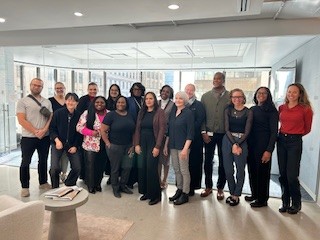
CSH and evaluation partners selected these four organizations from an extremely competitive applicant pool of New York City supportive housing providers.
Alliance for Positive Change
Alliance for Positive Change will integrate a housing-focused social worker to provide comprehensive clinical support services to residents of their Bronx supportive housing building. Residents have complex health needs including HIV and other chronic illnesses, mental health concerns, aging issues, and other challenges. The new full-time staff member will provide frequent, one-to-one counseling to improve residents’ financial skills, apartment-care skills, self-efficacy, and independence.
Lantern
Lantern’s Adapted-Intensive Case Management (A-ICM) pilot project will adapt the most effective elements of the traditional Intensive Case Management (ICM) model to make it more sustainable and scalable for organizations with limited resources. Case managers will receive training to support residents with complex needs through intensive services. Within the A-ICM model, services will include needs assessments, referrals and warm handoffs, health navigation, and accompaniment to health appointments. The pilot also includes hiring new Tenant Peer Navigators who will leverage their lived expertise to help residents navigate complex health systems.
Project Renewal
Project Renewal’s High-Acuity Response Team (HART) project will pilot a care team consisting of a nurse care manager and occupational therapist who will support their highest-need supportive housing residents. The new full-time staff members will manage a shared caseload to serve residents with complex needs including substance use, serious mental illness, aging, generational trauma, and/or chronic health issues. This pilot project will bring coordinated in-house care that specializes in complex needs, while increasing capacity for frontline staff who are strained in supporting 100 of their highest need residents across multiple supportive housing sites.
St. Nicks Alliance
The St. Nicks Alliance project will pilot a new mobile Wellness Outreach Team to support residents of their scattered-site supportive housing program. Tenants living in scattered-site supportive housing can be more difficult to reach, as they live in units rented from private landlords throughout the city. This multidisciplinary team will conduct comprehensive in-home assessments and provide ongoing support services including medication management, behavioral health support, and health education. This new team will coordinate with existing case managers and be integrated with community providers to facilitate warm hand-offs when clients stabilize. The outreach team plans to serve around 60 tenants during the pilot period.

Share
Share on facebook Share on facebook Share on facebook Share on facebook Share on facebook Share on facebookMeeting the Needs of Older Adult Tenants
Supportive housing providers are encountering a significant demographic shift as the population of older adults, particularly those aged 50 and above with histories of homelessness, continues to grow. This “graying” of the tenant base presents unique challenges and necessitates adapted approaches to care. Aging adults who have experienced homelessness often face complex health issues, including chronic illnesses and geriatric conditions, significantly earlier than the general population. Additionally, older adults in supportive housing often face distinct mental health needs and potential accessibility barriers. The average life expectancy is notably lower, which further highlights the unique challenges that this group faces.
In response to these needs, this toolkit is designed to equip service and housing providers in New York with best practices solicited from providers across the state.
Share
Share on facebook Share on facebook Share on facebook Share on facebook Share on facebook Share on facebookNew York City Expands Supportive Housing Eligibility for People Leaving Incarceration
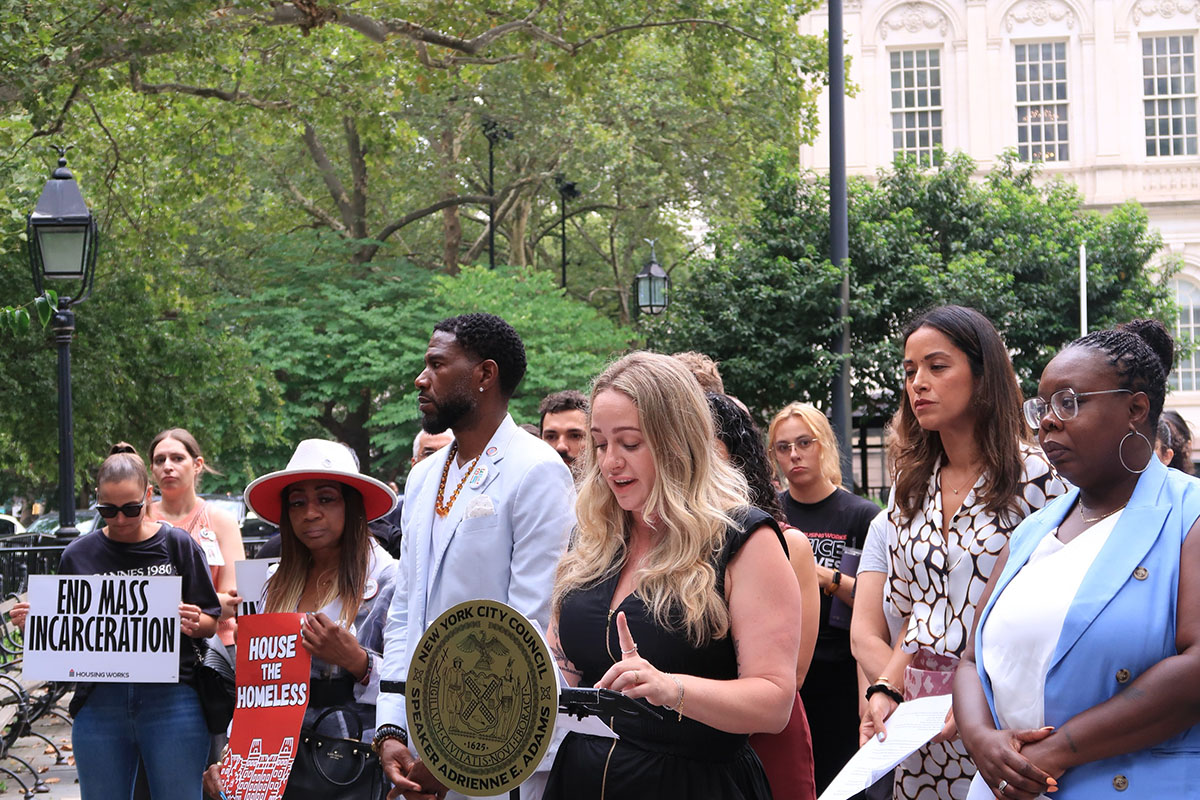
Yesterday, the New York City Council passed Intro 1100-A, a new law that expands access to City-funded supportive housing for individuals transitioning out of incarceration. CSH led advocacy efforts for the bill, working closely with local partners. Council Member Carlina Rivera sponsored the legislation and built support among her colleagues.
At a press conference outside City Hall, Lauren Velez, Director of CSH’s Metro NY Team, explained why passing the new law is so important:
“Too often, our neighbors leaving Rikers get trapped in a cycle of homelessness and incarceration without ever receiving the services and support they need to stabilize their lives. Intro 1100 changes that,” Velez said. She added, “When people cycle through homelessness and incarceration, it’s costly for New York taxpayers and makes our communities less safe.”
Velez was joined by Council Member Rivera, Comptroller Brad Lander, Public Advocate Jumaane Williams, and representatives from the Supportive Housing Network of New York, Fortune Society, Freedom Agenda, Urban Pathways, and Coalition for the Homeless.
Read City Limits op-ed written by Lauren Velez and Council Member Carlina Rivera.
What the Law Changes
Before this legislation, a person experiencing homelessness and who was incarcerated for 90 days or longer would have the jail time considered a “break” in homelessness, and none of their time in jail could be counted toward eligibility for supportive housing.
Intro 1100 ensures that anyone who enters jail as a person who is homeless will continue to accrue time toward eligibility. CSH has long maintained that any kind of institution, particularly a jail, should never be considered a home in any circumstance.
Why It Matters
The need for reform is urgent. In 2023:
– One-third of people admitted to NYC jails were unhoused before incarceration.
– More than 40% of people released from state prisons to NYC entered shelters immediately.
Supportive housing is a proven solution for people who cycle between homelessness and incarceration—especially those living with mental illness or substance use disorders. In contrast, punitive approaches like forced treatment or incarceration often fail to connect people to long-term housing and services.
Acknowledgments
CSH thanks Council Member Rivera, Comptroller Lander, Public Advocate Williams, and the “Jail is Not a Home” committee members who helped make this legislation possible:
– Lily Shapiro, Fortune Society (co-chair)
– Tierra Labrada, Supportive Housing Network of NY (co-chair)
– Kandra Clark, Urban Pathways
– Gary Jenkins, Urban Pathways
– Alison Wilkey, Coalition for the Homeless
– Sarita Daftary, Freedom Agenda
– Dr. Victoria Phillips, Community Advocate
– JJ Parish, Urban Justice
– Reggie Chatman, Fortune Society

Share
Share on facebook Share on facebook Share on facebook Share on facebook Share on facebook Share on facebookStrengthening Supportive Housing for New Yorkers with Complex Needs
New York City is facing a homelessness crisis, with more than 140,000 people experiencing homelessness, including many in migrant shelters. Supportive housing is an evidence-based best practice that has been proven to reduce homelessness and interactions with crisis systems while helping individuals and communities to thrive.
This landscape assessment discusses challenges and gaps in addressing the needs of New Yorkers with high acuity health needs. It also presents recommendations for effective interventions and promising models.
Share
Share on facebook Share on facebook Share on facebook Share on facebook Share on facebook Share on facebookNew Era of Supportive Housing: Resource Guide for Nonprofit Housing Sponsors (April 2024)
This is a resource guide for nonprofit housing sponsors interested in pursuing supportive housing development in New York State. It covers all the latest information about supportive housing financing programs, and incentives.
The focus of this guide is the early project planning and feasibility stages of development. It offers practical information on co-development partnerships, site selection, acquisition, and tools to help your staff and board of directors assess readiness and risk tolerance. Both experienced supportive housing sponsors and those new to development will find useful information to guide planning for your organization’s next supportive housing residence.

Share
Share on facebook Share on facebook Share on facebook Share on facebook Share on facebook Share on facebookAging and Thriving: A Call to Strengthen Supportive Housing for Older Adults in NYC
This report outlines the need and opportunity to develop effective, aging-centric, supportive housing models to help older New Yorkers age safely and with dignity in communities of their choice.
Supportive housing—affordable housing paired with support services—has long been a critical part of NYC’s housing and services ecosystem and is well-suited to help older adults thrive. However, existing models are not equipped to meet New Yorkers’ evolving needs as they age, resulting in unnecessary hospitalizations, premature nursing home admissions, stigma against behavioral health conditions for those who do need nursing home care, and overreliance on crisis systems to fill in the gaps.
This resource contains key recommendations for city and state leaders to enhance supportive housing for older adults. Not only will these changes save lives by ensuring older adults have a safe place to live with services appropriate to their needs, but they will also yield savings in New York City and New York State budgets.

Share
Share on facebook Share on facebook Share on facebook Share on facebook Share on facebook Share on facebookFUSE 10-Year Follow Up Report: Initial Findings
The New York City Frequent Users System Engagement program (FUSE) was part of the CSH’s Returning Home Initiative, a multi-year effort of public, inter-agency collaboration and investment that provided supportive housing for people cycling between incarceration and homelessness. NYC FUSE targeted persons with recurring homelessness and incarceration, most of whom challenged also by health, mental health, and/or substance use issues.
Columbia University researchers evaluated FUSE by comparing program participants with a closely matched comparison group of “frequent users.” This evaluation found that supportive housing significantly reduced participants’ (re)admissions to and time spent in jail and homeless shelters and their use of crisis healthcare services. These reductions resulted in significantly lower costs for publicly supported services, offsetting housing and other program costs. Results have inspired jurisdictions throughout the US to launch similar efforts.
Now, 10 years later, the FUSE Long Term Study presents a unique opportunity to examine stable housing as a critical component of successful community reentry, not simply in the short term but over people’s lives.